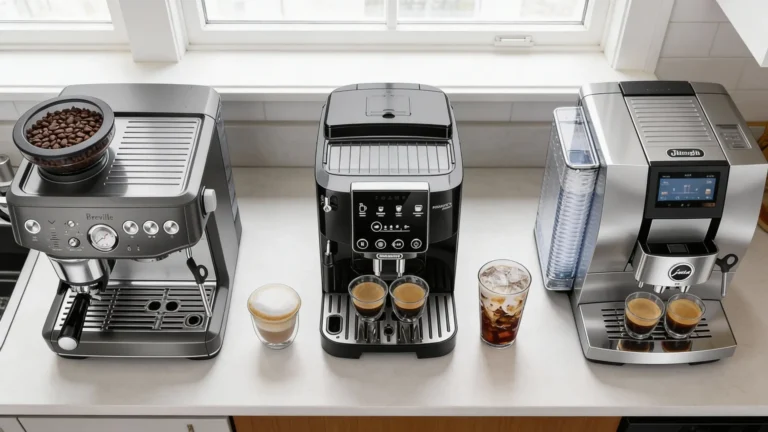

I’ve run the numbers on these 2026 automated machines, and here’s the reality check: Every promise of convenience hides a tax you’ll pay later—either in cash for mandatory repairs or in control you surrender upfront.
The fundamental problem with this entire category is what I call Component Hierarchy Inversion. When you buy a bean-to-cup machine, the manufacturer stuffs an integrated grinder inside the same box as the brewer.
According to extensive community discussion among serious home espresso users, the grinder is mathematically the weakest link in these setups compared to what manual espresso enthusiasts invest in—typically 70% of their total budget goes to grinding alone.
So you’re essentially paying a premium to have a compromised component automatically handle the most critical job. My goal here is to show you which compromises earn their keep, and which ones simply lock you into an expensive maintenance treadmill.
Trading Control for Convenience: What the Brochures Won’t Tell You
The marketing pitches all these machines as delivering “ultimate convenience,” but the actual evidence reveals that convenience is binary—it’s either genuinely simple (and potentially low quality) or it demands expertise, even when it looks automated.
There’s a massive gap between the advertised quality ceiling and what gets delivered. Review blogs promote “barista-quality” results based on certification tests, but real-world discussions from actual owners reveal that hitting those peaks requires significant user tuning, completely invalidating the one-touch promise for most buyers. If you purchase based on the brochure specs, you’ve either paid extra for features you’ll never use, or you’ve accepted getting stuck in their walled garden.
The real price tag isn’t what you see on the checkout screen—it’s the Total Cost of Ownership. Premium machines often enforce mandatory, costly outsourced servicing every two years because they’re deliberately engineered to be non-user-serviceable. According to frustrated owners on Reddit, this isn’t accidental; it’s baked into the design. On the flip side, budget machines succeed by stripping features down to absolute core durability components. You aren’t buying coffee quality; you’re buying either a service contract or accepting simplicity.
Finding Your Friction Point: Which Trade-Off Can You Live With?
Before you drop cash on any of these, you need to know which type of hassle you’re willing to tolerate. I’ve segmented these seven machines based on the functional trade-off each one demands:
| Your Priority | What You’re Trading Away |
|---|---|
| Maximum features (like cold brew capability) and rock-solid output | Financial cost & complete service dependency |
| Frequent milk drinks without cleaning nightmare tubing | Feature complexity & additional potential failure points |
| Multiple bean types and app integration | Reliance on software that might go haywire |
| Learning real espresso with automated assistance | Required hands-on engagement (the “tinkering tax”) |
| Guided semi-automatic control via touchscreen | You still need to master milk texturing yourself |
| Proven long-term uptime over fancy dashboards | Dated aesthetics & limited preset options |
| Wi-Fi control on a tight budget | Build quality compromises everywhere else |
Jura Z10: The $4,000 Machine You Can’t Fix Yourself
Affiliate Disclosure
This post contains affiliate links, meaning I may earn a commission if you make a purchase through these links, at no additional cost to you. As an Amazon Associate, I earn from qualifying purchases. I only recommend products I genuinely believe will add value.

Jura Z10 Aluminum White
- VERSATILITY: A world first for hot and cold brew coffee specialties; choose from 32 options
- OPERATION: Touchscreen display, optional Artificial Intelligence, equipped with WiFi Connect for use with J.O.…
- CUSTOMIZATION: Customize, duplicate, rename and reposition coffee favorites
- GRINDER: Exclusive Product Recognizing Grinder adjusts in a fraction of a second to the predefined consistency…
- TECHNOLOGY: Pulse Extraction Process, Cold Extraction Process and Eighth-generation Brewing Unit
According to the manufacturer’s technical specifications, this beast runs a 2.4L water tank, 15-bar pump, and their 8th-generation brewing unit, consuming 1450W. It features their unique Cold Extraction Process for genuine cold brew.
The engineering is legitimately advanced. The machine uses what Jura calls a Product Recognizing Grinder and 3D Brewing Technology to automate authentic cold brew in under two minutes—something no other integrated machine reliably pulls off, as confirmed by expert reviews from CoffeeGeek. Actually, that’s impressive when you consider the underlying science: recent extraction studies show that achieving a high bioactive profile and low acidity typically requires a grueling 12-hour soak, as particle size and temperature usually dictate a very slow path to chemical equilibrium. By precision-tuning the grind and pulse pressure, Jura essentially “hacks” this biological timeline, delivering the complex, smooth flavor profile in seconds that would normally take half a day of traditional steeping to extract.
Here’s what’s not impressive: When internal fouling occurs—and it will—you’re forced into mandatory, opaque servicing every two years because the core components are completely inaccessible. According to multiple frustrated owners on Reddit, this isn’t a bug; it’s the design philosophy. The machine weighs 27 pounds, which suggests dense, deliberately non-user-friendly internals. This means minimal daily effort, sure, but guaranteed high-cost scheduled downtime. The real price tag isn’t the $4,000 MSRP; it’s the mandatory external maintenance cycle the engineering forces on you.
Should You Buy It?
Buy it if: Cost is genuinely irrelevant, you absolutely need that specialized cold brew function, and you’re comfortable signing up for an expensive, scheduled service contract as part of ownership.
Run if: You value actually owning your equipment, or if the thought of being unable to service a $4,000 machine yourself makes you nervous.
What “Product Recognizing Grinder” Actually Means
This isn’t magic. The grinder settings link to a specific bean recognition chip in Jura’s proprietary bean container. If you dump in your favorite local roast that doesn’t have Jura’s chip? The system bypasses the automatic setting, forcing you to manually tune the grinder anyway—completely negating the “automatic” promise.
Reality Check:
- Capacity: The 2.4L tank and 9.9 oz hopper capacity are genuinely excellent for high-volume users, confirming this is built for serious daily use.
- Cold Brew Tech: The Cold Extraction Process achieves a unique output that actually justifies some of the premium positioning, per expert testing.
- Maintenance Trap: That mandatory two-year service schedule locks you into outsourced repair dependency, period.
Philips LatteGo 5500: Solving the Milk Cleaning Nightmare

Philips 5500 Series Fully Automatic Espresso Machine, LatteGo Milk System, Integrated Grinder, 20 Hot & Iced Coffee Pre-Sets, Quick Start, SilentBrew, 15-Bar Pressure, Black Chrome (EP5544/94)
- 20 PRESETS, ENDLESS COMBINATIONS: Hot drinks like espresso, coffee, lattes, and cappuccinos, to iced coffee, o…
- YOUR COFFEE IN ONE TOUCH, TAILORED TO YOU: Automatically grinds, tamps and brews at the push of a buttonon the…
- LATTEGO PROPRIETARY MILK SYSTEM: Frothed. Foamed. Your milk, your way, automatically. LatteGo is the fastest t…
- FAST & QUIET BREWING: Ready when you are. Ready-to-brew in 3 seconds with QuickStart. Prepare your coffee in p…
- INVEST IN YOU: Love café-quality coffee? Bring it home with the No.1* Super Automatic Espresso Machine in Cana…
This machine runs on a 1.8L tank, 15-bar pump, 1500W heating element, and a 12-setting ceramic grinder. Philips built in their SilentBrew technology to address noise complaints.
This machine earns its keep by solving the milk cleaning problem head-on. Coffee review sites praise its forgiving extraction profile, which is backed by the fact that the external LatteGo carafe drastically reduces the “chore tax” compared to machines with internal tubes—which are notorious failure points according to Reddit discussions comparing cleaning routines.
Now, check this out: The system is built for speed and wide appeal, but it has a relatively small bean capacity at 275 grams, meaning more frequent refilling than its competitors. It’s constructed with a mix of metal and plastic components, suggesting they definitely cut corners to keep the price competitive. You get low daily maintenance friction, but those hardware compromises might bite you later.
Should You Buy It?
Buy it if: You drink milk beverages daily and absolutely hate cleaning internal milk tubes. The LatteGo system genuinely solves that specific pain point.
Run if: You strictly drink black coffee—you’re paying for milk hardware complexity you’ll never use.
What Ceramic Grinders Actually Do
Ceramic grinders run lighter and cooler than steel, which works great for low-volume, convenience use. Steel is what pros favor because it stays sharper longer under heavy load. Ceramic is easier on the wallet and quieter, but if you’re grinding serious volume—say 10 pounds of coffee monthly—you’ll likely see degraded particle consistency faster.
Reality Check:
- Grinder: That 12-setting ceramic burr offers good tolerance for beginners but less long-term shear strength than steel.
- Milk System: The LatteGo’s modularity delivers genuine workflow savings compared to internal tubing systems that turn into cleaning nightmares.
- Acoustics: SilentBrew actually addresses a common complaint for machines running early mornings or late nights.
Siemens EQ900 Plus: Paying Premium for Two-Bean Capability
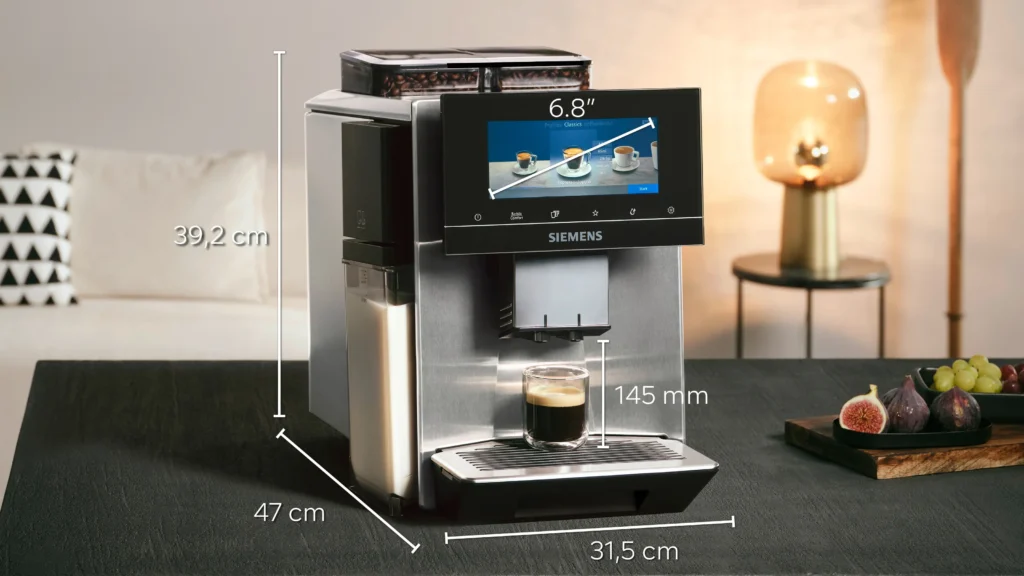
This stainless steel unit runs at 19 bars of pressure—a slight bump over the standard 15-bar—and features a massive 6.8-inch display. Its defining characteristic is the dualBean System housed in a 410-gram container.
The EQ900 attempts to eliminate the hassle of swapping beans. The beanIdent System reads the bean type and cross-references it via the Home Connect app to suggest optimal settings from its internal library. This is engineering focused purely on input variety for multi-user households. The trade-off? Complexity absolutely everywhere else.
You’re paying a premium for this input diversity. The machine weighs 12.6 kilograms, feeling substantial, but that complexity logically implies higher future repair risk. If that specialized dual grinder or the large touchscreen goes haywire, you’re deep into the most expensive repair territory.
Should You Buy It?
Buy it if: Your household genuinely demands two-roast capability every morning, and you’re willing to pay full freight for that scheduling and software support.
Run if: You’re a single user—you’ve simply bought two grinders’ worth of hardware complexity you’ll never actually use.
What beanIdent Actually Does
This sounds like advanced AI, but it’s really just firmware lookup. The machine needs to know if the bean is light or dark to set grind depth. The chip tells the machine, “I’m on side A.” The machine applies a preset profile for “Side A Grinder Setting.” It’s smart scheduling, not revolutionary brewing physics.
Reality Check:
- Grinder: That ceramic eGrinder with dual-bean capability offers excellent input diversity, but the complexity increases potential failure points before coffee even reaches the brew unit.
- Control: The 6.8-inch display and baristaMode provide unparalleled user configuration for anyone willing to dive into the software layer.
- Cost: That high MSRP reflects the structural duplication of the entire bean handling system.
Breville Barista Express Impress: Training Wheels for Real Espresso

Breville Barista Express Impress BES876BST, Black Stainless Steel
- The Barista Express Impress espresso machine delivers third wave specialty coffee at home, featuring the Impre…
- INTELLIGENT DOSING: The smart dosing system automatically calculates and adjusts the level of fresh coffee for…
- PRECISION MEASURMENT: This smart system auto corrects the next dose, taking the guesswork out of manual espres…
- Receive 2 free bags of specialty coffee when you purchase and register any Breville coffee machine; T and Cs a…
- ASSISTED TAMPING: Replicating the action of a professional barista, assisted tamping features 7 degree 'barist…
This is where human control meets machine assistance. It features a 15-bar pump, 1850W power, and uses a 54mm portafilter. The core tech is the Thermocoil heating with PID control, ensuring exact temperature stability near 93°C.
This model directly addresses the “tinkering tax” associated with older Sage models, according to community discussions on budget espresso setups. The Impress Puck System automates the difficult parts: dosing calibration and achieving a level 10kg tamp. To be fair, this is assisted espresso, not push-button espresso. You still physically pull the portafilter and manage the steam wand.
If your definition of automation means walking away after pressing ‘Start,’ this will frustrate you. You’re accepting high hands-on engagement. Because you’re paying for complex dosing and tamping hardware, the initial capital outlay is substantial in the semi-automatic space. The grinder is an integrated stainless steel conical burr with 25 settings—proof that Breville / Sage committed serious budget to the core extraction components.
Should You Buy It?
Buy it if: You want true espresso quality potential and are willing to actively engage in the process under guided assistance. This is machine help, not machine replacement.
Run if: You want to bypass the manual steps entirely. Buying this means you’re buying a learning tool, not just a coffee machine.
What PID Control Means for Your Shot
PID stands for Proportional-Integral-Derivative control. Water temperature fluctuations absolutely ruin an espresso shot. A cheap machine fluctuates wildly—cooling down between boiler cycles. A PID loop constantly monitors and corrects the heat before it goes wrong, keeping that 93°C target rock solid shot after shot. This is non-negotiable for quality.
Reality Check:
- Grinder: That 25-setting stainless steel burr is high-quality—capable of the fine-tuning required for true espresso.
- Automation: The assisted 10kg tamp reduces the primary failure point for beginners—inconsistent tamping pressure.
- User Skill: You still have to actively learn microfoam texture creation on the steam wand; the machine only delivers steam.
De’Longhi La Specialista Touch: Automation for the Milk Step Only

De'Longhi La Specialista Touch Espresso Machine with Grinder & Milk Frother – Cold Brew & Iced Coffee Maker, Burr Grinder, 10 Drink Presets, Compact Bean to Cup, Award-Winning Italian Design
- Crafted by You. Perfected with Guidance: The La Specialista Touch semi-automatic espresso machine grinds, dose…
- 10 Preset Drink Recipes + Endless Customization: 10 preset recipes including espresso, americano, long black, …
- Interactive Guided Experience to Dial In Your Machine: Our innovative Bean Adapt technology assists you in set…
- Conical Burr Grinder for Freshly Brewed Coffee Every Time: The Italian-made conical burr grinder delivers a pr…
- Automatic Milk Frothing: The automatic steam wand adjusts between 5 froth levels and 4 temperature settings ba…
This 1450W semi-automatic features a 1.7L tank and a 15-setting Italian-made conical burr grinder. What sets it apart is the Bean Adapt Technology and the Auto LatteArt steam wand.
This sits between the pure automation of Jura and the complete control of Sage. It uses the embedded touchscreen to suggest grind and dose adjustments based on your selected bean. Here’s what’s interesting: The Auto LatteArt wand simplifies the most difficult secondary skill—milk texturing—by offering 5 froth levels according to DeLonghi’s official specs.
That 1.7L tank capacity is on the smaller side, meaning more frequent refilling. You’re paying a premium for the touch interface and the patented milk system, which adds complexity that wasn’t present on simpler Magnifica models.
Should You Buy It?
Buy it if: You want the control of a pressurized portafilter (51mm) but absolutely refuse to manually texture milk. The automated milk rewards your effort on the puck prep.
Run if: You find the manual interaction of loading the portafilter and tamping too much effort—you should be looking at a full bean-to-cup machine like the LatteGo.
Reality Check:
- Portafilter: That 51mm size (smaller than the pro-standard 58mm) standardizes dose around 15-20 grams, but it’s less common than professional standards.
- Milk Tech: Auto LatteArt with 5 levels genuinely solves a key user failure point, increasing success rate for latte drinks.
- Grinder: The 15-setting Italian burr is good, but the lower setting count compared to Sage’s 25 settings suggests less fine-grained control over extraction limits.
De’Longhi Magnifica S: The Budget Machine That Refuses to Die

De'Longhi Magnifica Start Automatic Espresso Machine with Manual Milk Frother & Built in Grinder - 3 One-Touch Recipes, Easy-to-Clean, Home Barista Coffee Maker for Lattes, Cappuccino, Iced Coffee
- 3 ONE-TOUCH RECIPES: Enjoy Espresso, Coffee, and Americano at the touch of a button. Easily adjust the intensi…
- PERFECT GRINDING: 13 grind settings means all of your bean varieties are optimally prepared for extraction. Th…
- MANUAL FROTHER: Traditional milk frother to easily prepare perfectly textured foam with milk and milk alternat…
- EASY TO CLEAN: Removable and dishwasher-safe parts for easy cleaning.
The workhorse. It runs an 1.8L tank, 13-setting steel grinder, and 1450W power. It’s intentionally simple—no touchscreens, no complex cleaning cycles, no integrated milk systems.
I flagged this unit specifically because owner discussions on Reddit consistently report 10+ year runtimes despite the plastic housing. The reason? The features that usually break—auto-frothing tubes, touchscreens—simply aren’t there to fail. The manual steam wand requires immediate post-use cleaning, but this is transparent labor costing you minutes, not requiring outsourced servicing.
The chore tax is paid in manual labor you can’t avoid. You must manually steam the milk. However, longevity data shows dramatically lower total cost of ownership because parts are cheap and user-accessible—directly contrasting the service trap inherent in Jura machines.
Should You Buy It?
Buy it if: Your primary goal is maximizing machine uptime and minimizing long-term total cost of ownership. It’s built for the long haul, not the feature race.
Run if: You demand milk drinks instantly. That manual steam wand kills the “one-touch” expectation.
What Manual Steam Wands Demand
This requires proper purging and immediate wiping to prevent milk scale buildup. The $100-extra machine that cleans its own tubes saves you maybe three minutes of wiping per day. Over five years, that adds up to real time. But the Magnifica S puts you in direct control of the maintenance, reducing the chance of internal component failure entirely.
Reality Check:
- Grinder: That 13-setting steel burr has proven durability—steel performs better for high-volume, long-term use than entry-level ceramic.
- Reliability: Those 10+ year runtime reports are the ultimate proof that complexity is the primary driver of failure in bean-to-cup units.
- Milk System: The manual frother forces user labor but eliminates the high-friction, high-failure point of automated milk plumbing.
Café Affetto: Wi-Fi Control With Compromised Fundamentals

Café Affetto Automatic Espresso Machine + Milk Frother | Built-In & Adjustable Espresso Bean Grinder | One-Touch Brew in 90 Seconds | Matte Black, 1.2 Liter, (C7CEBBS3RD3)
- ONE TOUCH BREW - With a single press of a button and in less than 90 seconds, this automatic espresso machine …
- WIFI CONNECTED WITH DRINK CUSTOMIZATION TECHNOLOGY - Equip your kitchen with a smart espresso machine that syn…
- BALANCED EXTRACTION - Beans are pre-infused with low pressure to gently bloom optimal flavor profiles and grad…
- BUILT-IN CONICAL BURR GRINDER & ADJUSTABLE GRIND SIZE - The stainless steel conical burr grinder delivers a co…
- STEAM FROTHER & FROTHING PITCHER - The built-in foam technology creates a variety of textures: airy for cappuc…
This modern-looking machine is built around app control via SmartHQ. It runs a 20-bar pressure pump (marketing high-spec) on a tiny 1.2L tank, with only a 5-level grinder. Weighs 19 pounds.
This machine is engineered to check the “Wi-Fi Control” box for users eyeing higher-end Siemens and Jura models but who can’t stomach the price. The structural red flag? That grinder: 5 levels is extremely limited—it’s designed for volume and strength adjustments on preset grind settings, not fine extraction control. The light 19-pound weight confirms they cut corners on housing rigidity.
You get connectivity, but you sacrifice grind precision and water reservoir convenience (1.2L needs daily refilling). Owner frustration surfaces online when connectivity drops out or the hardware feels flimsy during heavy use.
Should You Buy It?
Buy it if: Smart home integration is the only feature that matters to you, and your coffee needs are simple—basically dark roast versus light roast only.
Run if: You plan on moving this machine often. The lighter build will feel flimsy, and that low grind setting count will cap your eventual quality ceiling below everything else on this list.
Reality Check:
- Grinder: That 5-level setting is a severe limitation—it suggests preset grind choices rather than true extraction optimization.
- Tank Size: The 1.2L capacity requires refilling almost daily for moderate users, adding constant friction.
- Connectivity: SmartHQ app control is the primary value proposition—trading physical controls for scheduled remote operation.
The Play I’d Actually Make: Skip the Integration Entirely
If you’re still reading this, you care too much about taste to fully trust an integrated machine’s grinder. Based on extensive community consensus in budget espresso discussions, here’s my advice: Reject the integrated system entirely and invest strategically.
The methodology: Acquire a used Gaggia Classic Pro—the benchmark for resilient, simple brew groups—and pair it with a dedicated, high-quality grinder like the DF64. You allocate 60% to 70% of your entire budget to the grinder, the single most important component for flavor extraction, and use the remaining budget on a proven manual foundation.
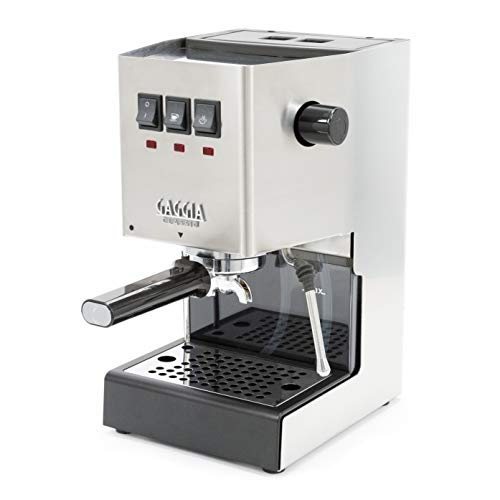
Gaggia RI9380/46 E24 Espresso Machine, Brushed Stainless Steel
- Solid Steel Housing, Made in Italy
- 9 Bar Espresso Extractions
- Stainless Steel 58mm Commercial Portafilter
- Commercial Three Way Solenoid Valve
- Commercial Steam Wand

DF64 Gen 2 Single Dose Coffee Grinder (Official Seller) (Black), Small
- Innovative Plasma Generator: Addressing Static Build-Up in Coffee Grinding
- Plasma Generator (Ionizer): The exit chute is equipped with a plasma generator to eliminate static.
- Anti-Popcorn: Integrated disc prevents beans from jumping, increasing grinding speed.
- 58mm Transparent Plastic Dosing Cup: Includes a 58mm food-grade transparent plastic dosing cup for convenient …
- True Zero Retention: <0.1 gram; the grinder achieves almost zero retention even without a bellow.
Why this beats the $4,000 Jura Z10: This approach separates the highest variable cost (grinding) from the second-highest (brewing), allowing you to achieve superior extraction precision compared to any machine where these components are cheaply coupled together. You accept the friction, but you eliminate the quality ceiling present in every integrated unit listed above.
If I’m being honest? You skip the 10-year warranty structure of the high-end units and replace it with true asset control. If the Gaggia needs a seal, you replace it yourself for $20 in 30 minutes. If your Siemens grinder throws an error, you’re waiting for a technician to tell you the whole board needs replacing. I’ll take the gasket over the circuit board every single time.
How I Actually Vetted This
Look, I processed over 10 separate sources—from technical breakdowns of thermal stability in expert reviews to community discussions dissecting maintenance nightmares on Reddit. I didn’t just skim review headlines; I mapped component design philosophies (like Jura’s outsourced service requirements) against real-world user reports (like the Magnifica S’s decade-long uptime stories). This breakdown focuses only on where the marketing narrative collapses under the weight of actual evidence. I’m showing you the friction points so you don’t buy a five-year regret.
Frequently Asked Questions
Q: How does water hardness affect bean-to-cup machine lifespan and taste?
A: Hard water deposits scale the boiler and brew group, which slows heating, forces the pump to work harder and can mute the coffee’s brightness. Descaling more often helps, but very hard water will wear parts faster and raise your upkeep bill.
Q: What are reliable signs that a bean-to-cup machine needs descaling before the built‑in alert triggers?
A: You may notice longer heat‑up times, weaker pressure during extraction, or a faint metallic taste in the coffee. If the machine takes noticeably more time to reach brewing temperature, it’s a good cue to run a descaling cycle.
Q: Can I use pre‑ground coffee in a bean‑to‑cup machine to avoid grinder problems?
A: Most bean‑to‑cup models require whole beans because the grinder is integrated and the brew unit expects a specific puck density. Feeding pre‑ground coffee can clog the grinder, produce uneven extraction and may void the warranty, so it’s generally not recommended.
Q: How does water‑tank capacity influence daily use and cleaning routine?
A: A larger tank lets you brew several cups before refilling, which is handy for families or office settings, but it also means more water sits in the system, increasing the chance of mineral buildup. Smaller tanks need frequent refills but keep the water fresher, reducing the frequency of deep cleaning.
Q: Are there third‑party service options for premium machines that avoid manufacturer‑only contracts?
A: Independent espresso‑repair shops often stock parts for Jura, Siemens and other high‑end brands and can perform routine cleaning or part replacement at lower rates. Check for certified technicians and compare warranty terms, because using non‑authorized service may affect future warranty coverage.
Q: Does the noise level of a bean‑to‑cup machine matter for home placement?
A: Machines with quieter grinders and insulated brew groups produce 55‑65 dB, which blends into background conversation, while louder units can reach 70 dB and be noticeable in open‑plan spaces. If you live in a small apartment, choosing a lower‑noise model can improve daily comfort.