
Starbucks coffee shops across South Korea will close early for the first time since the brand entered the market in 1999, as owner Shinsegae Group moves to contain public outrage over a controversial “Tank Day” promotion that linked a tumbler campaign to some of the country’s most painful pro-democracy struggles. On June 15, 2026, Shinsegae announced in Seoul that all Starbucks Korea employees, store partners, and Emart executives will undergo mandatory historical awareness and social-sensitivity training, including a nationwide early closure on June 22.
According to AJU PRESS, more than 2,000 Starbucks Korea stores will shut their doors at 3:00 p.m. local time (06:00 GMT) on June 22 for three hours of staff training, an unprecedented move confirmed by BBC News and Korea JoongAng Daily. A Shinsegae spokesman told Korea JoongAng Daily that the early closures and companywide training are intended to demonstrate the group’s determination to take the marketing controversy seriously and prevent a recurrence.
The backlash traces to May 18, 2026, when Starbucks Korea launched a “Tank Day” promotion for its Tank tumbler series on the anniversary of the 1980 Gwangju Democratic Uprising, using the slogan “Tak on the desk.” BBC News and Seoul Economic Daily reported that the date coincided with commemorations of the military’s deadly suppression of pro-democracy protesters in Gwangju, while the phrase echoed a police claim used to obscure the 1987 torture death of student activist Park Jong-chul. BBC News also reported that Shinsegae said the campaign slogan was generated using an AI tool.
Public anger was immediate. Seoul Economic Daily noted that the Gwangju Metropolitan Council called for an indefinite boycott of Starbucks, while the ruling Democratic Party endorsed a consumer boycott, as reported by Businesstimes.com.sg. BBC News, UCA News, and LetsDataScience described protests outside Starbucks stores in Seoul and Gwangju, where demonstrators smashed branded cups.
South Korea’s president, Lee Jae-myung, a former student activist, sharply criticized the promotion on May 18. In a post on X cited by Seoul Economic Daily, he called it a “‘5·18 Tank Day’ event that desecrates the bloody struggle of the victims and citizens” and said that corresponding moral, administrative, legal, and political responsibility must follow. Businesstimes.com.sg reported that Starbucks US headquarters later issued a statement calling the campaign “unacceptable” and acknowledging the deep pain and offense it had caused.
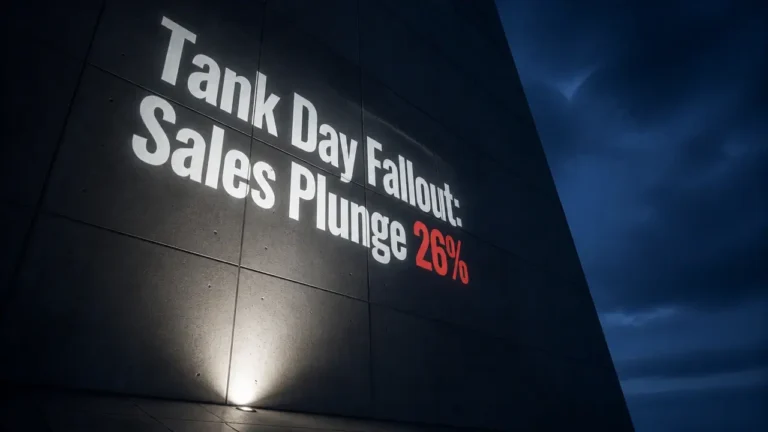
Market data show how swiftly consumers reacted. AJU PRESS, citing IGAWorks Mobile Index figures, reported that Starbucks Korea’s weekly payment volume fell 26.3% to 23.69 billion won (about US$17.3 million) between May 18 and 24 compared with 32.16 billion won the previous week, while overall sales during the week of May 18–24 dropped roughly 25% from the May 4–10 period. Over the same week, new installations of the Starbucks app declined 23.6% to 36,994, pushing it from second to fifth place among food-and-beverage apps, according to AJU PRESS.
Shareholders also felt the impact. Seoul Economic Daily reported that E-Mart, the Shinsegae affiliate that owns Starbucks Korea under a licensing agreement, saw its share price plunge more than 8% intraday in the days following the controversy.
In response to rising refund demands, AJU PRESS noted that Starbucks Korea temporarily relaxed its prepaid card refund rules from June 1 to June 14, allowing full refunds without the usual requirement that 60% of the balance be used. AJU PRESS added that Starbucks Korea has annual sales exceeding 3 trillion won (about US$2.2 billion), underscoring the commercial scale at stake in the dispute.
Shinsegae’s leadership mounted a public apology campaign. Businesstimes.com.sg and AJU PRESS reported that Chairman Chung Yong-jin bowed three times at a televised press conference on May 26 and stated, “I sincerely apologise and ask for your forgiveness and to all who have been hurt. I take it very seriously that, as a result of this inappropriate marketing campaign, many people have experienced deep pain and anger. All responsibilities are on me.” In a second televised apology the same day, cited by AJU PRESS, he added, “I will not make any excuses. This is my fault. We will regain the public’s trust not through words, but through actions.”
Beyond the June 22 store closures, Shinsegae is extending training and governance changes across the group. AJU PRESS and Korea JoongAng Daily reported that corporate headquarters staff and Emart executives are scheduled for in-person historical awareness and social-sensitivity training at the Shinsegae Namsan building in central Seoul on June 17, with a two-week online program for Emart and other affiliates starting July 1. The same outlets said Starbucks Korea plans to overhaul its internal marketing process by introducing a social-sensitivity checklist and requiring multi-department and external expert review before campaigns are approved.
Police have launched an investigation after complaints from families of Gwangju victims, according to Businesstimes.com.sg and AJU PRESS, which also reported that Starbucks Korea fired its CEO, Son Jung-hyun, removed five employees involved in the campaign, and indicated it will decide on legal action against them depending on the outcome of the police probe.