
Systemic Barista Precision Extraction demands absolute command over every hidden variable. I see you fighting inconsistent shots because standard advice ignores the physics linking your grinder to water chemistry.
We bypass hype by integrating digital scales, pressure gauges, and refractometers to measure actual resistance and yield. You will uncover the mechanical logic behind dose, temperature, and flow, empowering you to diagnose channeling risks and engineer perfect espresso without relying on recipes.
Seven variables control every espresso extraction.
Consistent espresso demands coordinated bean quality, grind size, dose, water quality, temperature, pressure, and extraction time to regulate solubility and flow. When we pull a shot, each of these levers moves the needle on flavor balance. Ignoring even one throws off the whole system.
While many barista handbooks champion a three‑variable myth, recent experiments show that temperature, pressure, and water mineral content each shift extraction yield by up to 10%. Alessandro Zengiaro notes the shift in modern requirements.
Traditionally, dose, yield, extraction time, and grind size were the four main variables used to prepare espresso. While all are still equally important today, as espresso machine technology has advanced over the last ten years, baristas have to consider an even wider range of factors.
We achieve true Barista Precision Extraction by tracking every factor. Here are the seven core variables and their standard targets:
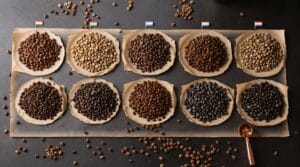
- Bean Quality: Freshness and roast level dictate the available soluble material.
- Grind Size: Particles should resemble refined salt to control resistance.
- Dose: Industry standard sits between 18‑20 g for a double shot.
- Water Quality: Mineral content and pH directly influence solubility and taste.
- Temperature: Optimal range stays between 195‑205 °F for proper dissolution.
- Pressure: Machines aim for 9 bar to push water through the puck.
- Extraction Time: A complete shot usually runs ≈25‑30 s from pump start.
Now that we know every lever, which tools let us measure and control them most reliably?
How digital scales lock in your dose and yield
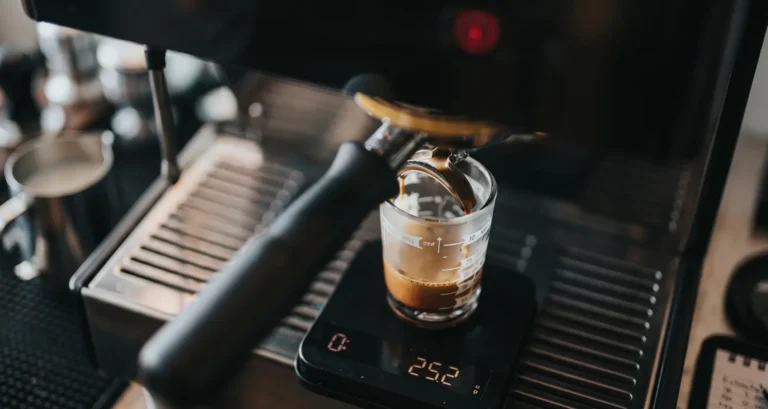
A responsive digital scale measures your ground coffee dose and final liquid yield to confirm a target 1:2 ratio. We rely on weight because bean density fluctuates with every grind adjustment, making volume unreliable for consistency. This foundation supports every other variable in Barista Precision Extraction by ensuring your starting point remains constant.
When you skip the scale, you introduce invisible variables that change every time you open a new bag of beans. A half-gram deviation in your dose might seem small, but it shifts the resistance in your puck enough to alter flow‑rate and flavor balance. To keep your shots repeatable, we need to treat weight as the non‑negotiable baseline.
- Dose: This is the weight of dry coffee you put into the portafilter, typically starting at 18 g.
- Yield: This is the weight of the liquid espresso that comes out, ideally around 36 g for a standard shot.
- The Workflow: Tare your portafilter, weigh the dose, pull the shot, weigh the yield, and adjust your grind if the time or taste is off.
While the industry often points to a specific standard, blind adherence can limit your potential with different beans. Research indicates the “golden brew ratio 1:18” is often presented as a universal sweet spot, yet no sensory‑panel data or extraction‑yield percentages substantiate its superiority over nearby ratios such as 1:17 or 1:19. You should feel empowered to test adjacent ratios and record TDS to verify the best fit for a given bean.
| Ratio (Dose : Yield) | Dose (g) | Yield (g) | Typical Extraction Time* | Typical Flavor Notes |
|---|---|---|---|---|
| 1 : 16 | 18 | 288 | 24‑26 s | Full body, pronounced sweetness, chocolate‑nutty tones, lower acidity |
| 1 : 17 | 18 | 306 | 25‑27 s | Balanced body, bright acidity, caramel‑toffee sweetness, subtle fruit |
| 1 : 18 | 18 | 324 | 26‑28 s | Classic “golden‑ratio” espresso, harmonious acidity & sweetness, citrus‑fruit hints |
| 1 : 19 | 18 | 342 | 27‑29 s | Cleaner cup, higher acidity, lighter body, floral & berry notes |
| 1 : 20 | 18 | 360 | 28‑30 s | Very bright, tea‑like clarity, pronounced acidity, minimal body, delicate fruit & floral nuances |
*Extraction times are approximate for a standard 18 g dose on a typical 58 mm portafilter; actual times may vary with grind, pressure, and machine.
Even with accurate weights, your grinder might introduce slight variations over time. Lauro Fioretti advises:
If you want to be precise [and don’t have a gravimetric grinder], go with your grinder by time and then check your electronic scale… check the final product and adjust it manually. Of course, this takes time.
This observation confirms that the scale is your final verification tool when automation isn’t available. With the right amount of coffee locked in, how do temperature and pressure shape the extraction?
Thermometers and Pressure Gauges Control Temperature and Pressure
Digital thermometers and pressure gauges track the temperature range 195‑205 °F and pressure 9 bar to stabilize extraction. Precise Barista Precision Extraction relies on seeing the exact heat and force instead of guessing. You need to see the numbers to know if you are extracting evenly or causing channeling.
When we talk about dialing in a shot, heat and force are the levers we pull. A thermometer tells us if the water is hot enough to dissolve solids without burning them. A pressure gauge shows if the pump is pushing hard enough to emulsify oils without blowing through the puck.
- Temperature Range 195‑205 °F: Light roasts benefit from the higher end to increase solubility, while dark roasts need the lower end to prevent bitterness.
- Pressure 9 bar: This standard prevents channeling by ensuring water moves through the coffee bed evenly.
Even with a calibrated thermometer, hidden variables like water hardness and pH level shift extraction yield by 5‑10 %. Most guides assume filtered water is sufficient, but mineral composition dramatically affects perceived acidity and bitterness. We advise measuring water hardness (e.g., 50‑150 ppm CaCO₃) and adjusting with a mineral‑addition kit if outside the 70‑150 ppm sweet spot.
Seeing these readings in real‑time changes how we adjust the machine. The videos below demonstrate the exact steps to verify your tools are telling the truth.
Once your tools are verified, you can trust the data they give you. Carles Sánchez explains why this stability matters for flavor.
The temperature of the water plays the most important role during espresso extraction. Many of the soluble compounds that we enjoy tasting in espresso will extract at the right concentration within a small temperature range. This range is usually between 92 °C and 95 °C (198 °F and 203 °F), depending on the coffee.
Data confirms why maintaining the temperature range is essential for consistent results. When your pressure gauge and thermometer are accurate, you stop chasing ghosts and start controlling the brew.
How your grinder sets grind size and distribution
Ultimately, a precise grinder regulates grind size to control flow rate while a distribution tool levels the bed for consistent tamp pressure 30 lb. When we adjust the burrs, we change how easily water passes through the coffee puck. A finer setting slows the flow, whereas a coarser setting speeds it up significantly.
We aim for specific textures and pressures to keep this process stable.
- Target Texture: The grounds should resemble refined table salt to ensure even saturation.
- Visual Cue: If the stream turns pale yellow too early, known as blonding, the water is finding weak spots.
- Pressure Goal: We apply tamp pressure 30 lb to lock the bed without crushing it.
Using a distribution tool spreads the grounds evenly before we apply that pressure. Without this step, an uneven puck leads to channeling, which creates sour or bitter pockets in your cup. A visual check is the fastest way to confirm whether your distribution is truly even.
Barista recommendation to use a bottomless portafilter to expose channeling provides a low‑cost visual validation of the fluid‑dynamics principle that “water follows the path of least resistance”. You can see this clearly when pulling a shot with a bottomless portafilter and watching for spurting streams.
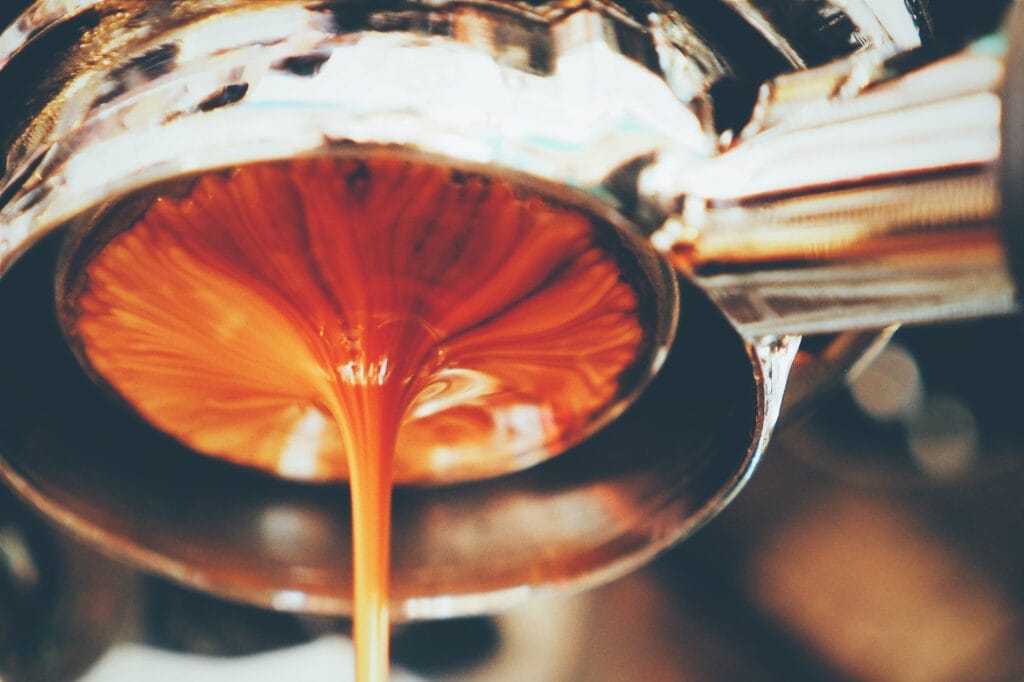
Adjusting grind size or distribution accordingly stops those spurts before they ruin the shot. This discipline forms the backbone of reliable Barista Precision Extraction.
As Scott Rao explains:
Grind distribution is one major thing that separates a good shot from a bad shot. Not necessarily particle set distribution of the grinds, but how the grounds are distributed in the puck. From that perspective, you get good flow rate, you get a better‑tasting espresso, and you can get higher extraction with the right profile.
This clearly shows why maintaining even grounds is essential for the grinder to perform its job correctly. Even with perfect grind and distribution, the water itself carries the final variable we need to address.
Why Refractometer Accuracy Depends on Water Hardness
A handheld refractometer determines extraction strength by tracking light refraction through brewed liquid where water hardness 70‑150 ppm CaCO₃ and pH ≈7.0 directly dictate final TDS and Brix outcomes. We often miss that the minerals in your water aren’t just background noise; they actively change how the light bends inside the device. If the mineral base shifts, your strength numbers shift with it, even if the coffee dose stays the same.
When we talk about water, we aren’t just talking about wetness. We are talking about a chemical solvent loaded with ions that grab onto flavor compounds. If the solvent is too soft, it strips the coffee too aggressively. If it is too hard, it leaves the good stuff behind.
- Water Hardness and pH: Aim for a hardness range of 70‑150 ppm CaCO₃ with a neutral pH ≈7.0. This balance prevents your equipment from scaling while ensuring enough minerals exist to bind with flavor compounds.
- TDS and Brix Metrics: These numbers represent the percentage of dissolved solids in your cup. A handheld refractometer reads these by measuring how much the liquid bends light, giving us a concrete number for strength rather than a guess.
Research confirms this biochemical reaction. A peer‑reviewed study quantifies how divalent cations like magnesium and calcium bind to polar motifs in coffee solutes, showing that higher concentrations increase binding energy and extraction efficiency (pubs.acs.org). It demonstrates that magnesium extracts flavor‑active compounds more effectively, while calcium contributes to overall extraction yield.
This nuance explains why pH isn’t the only metric that matters. Dr. Marco Wellinger notes:
It is far more important to keep alkalinity within a certain range than pH.
This proves why maintaining the mineral gradient is essential for consistent results. If your measured TDS falls outside the 1.15‑1.25 % range for espresso, you need to adjust the water itself. You can add a calibrated mineral packet or use a reverse‑osmosis system followed by re‑mineralization to hit the target.
Mastering these chemical variables transforms standard brewing into reliable Barista Precision Extraction.
Your workflow becomes repeatable with a shot‑log sheet
Repeatable workflow connects inner‑burr adjustment, OPV calibration, and shot‑log sheet data inside a quick‑fix table. This structure turns abstract Barista Precision Extraction goals into physical actions we can measure. I walk you through each lever so you see exactly where the extraction breaks.
We start with fresh beans because stale oil blocks water flow regardless of pressure. Set your grind, dose, temperature, and water chemistry before pulling the first shot. If the extraction runs under 25 seconds, move the inner‑burr setting one click finer. This small change adds roughly 0.5 seconds to the flow time without altering the dose. I noticed most commercial blogs supply static ratio tables, but the most‑driven Reddit threads request concrete, step‑by‑step procedures like how to adjust the inner‑burr setting or clean the basket. That gap shows what practitioners actually need to master Barista Precision Extraction.
The visual below maps this entire process from bean selection through final shot‑log entry.
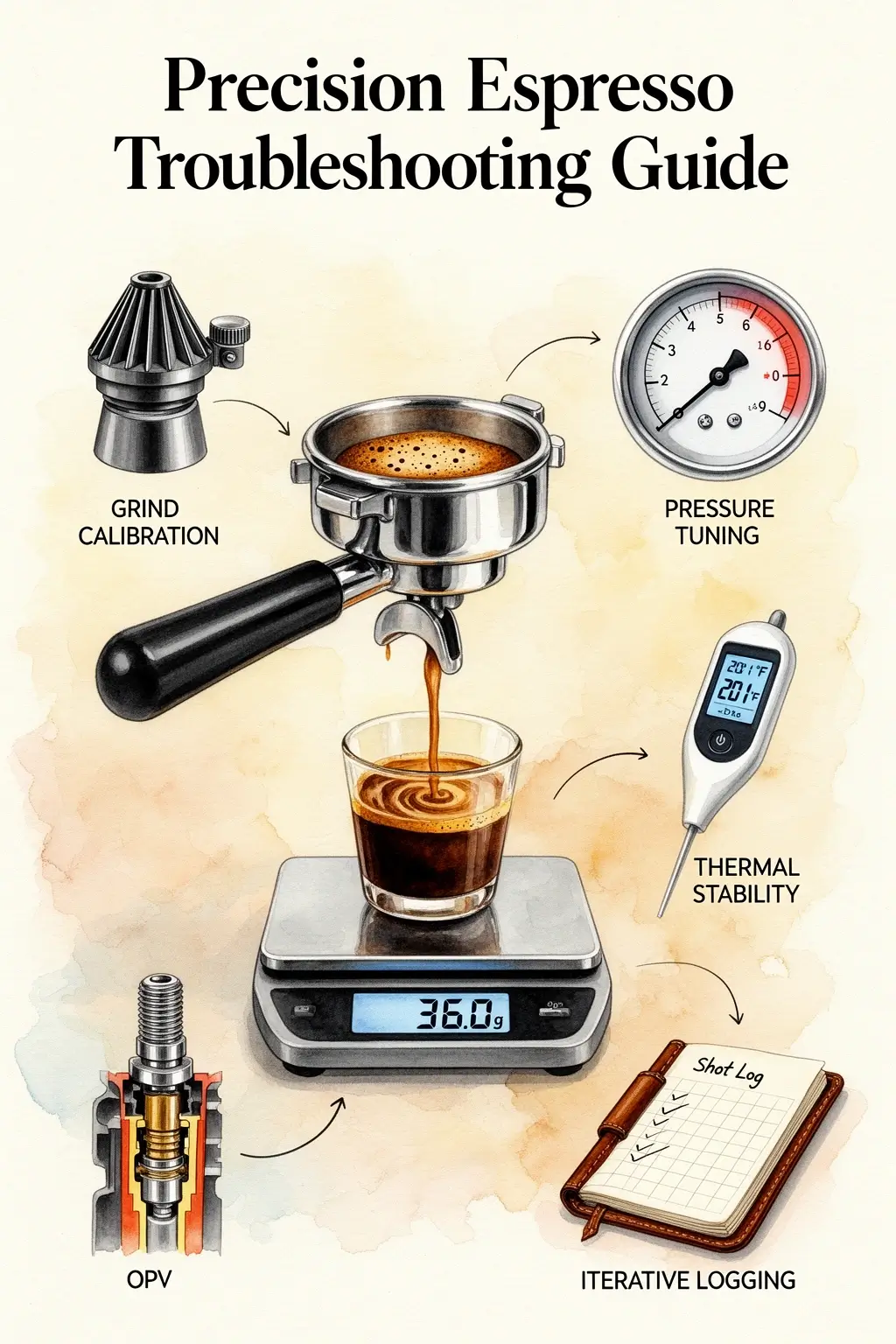
Pressure stability matters just as much as grind size. You must check OPV calibration to maintain 9 bar pressure during the shot. If your gauge spikes higher, the valve needs adjustment to prevent channeling. Keep this reference nearby for immediate corrections when the flow looks wrong:
- Fast Flow: Inner‑burr +1 click → add ≈0.5 s to extraction time.
- Channeling: Re‑tamp evenly → check basket for old grounds.
- Under‑extraction: Increase temperature → verify water hardness levels.
- Bitter Taste: Coarsen grind → reduce dose by 0.5 g.
Clean equipment prevents old oil from spoiling new beans. We wipe the basket and portafilter after every single use. Re‑tamping requires a level surface to ensure even water distribution. If you skip this step, the workflow fails no matter how good your beans are.
Recording each variable in a shot‑log sheet allows for iterative refinement. You cannot fix what you do not track. Write down the time, yield, and taste notes for every attempt. This habit turns random guesses into a systematic dialing‑in routine.
Real Talk: What Most People Miss About Barista Precision Extraction
Q: Why does a half-gram dose deviation wreck your shots when volume seems fine?
A: Weight trumps volume because bean density fluctuates with every grind and bag, turning a half-gram slip into puck resistance chaos that speeds flow and under-extracts flavor. Scale every dose religiously; it’s your non-negotiable anchor against invisible variables that kill consistency.
Q: What if your TDS reads perfect but the shot tastes off—water hardness to blame?
A: Minerals like calcium and magnesium bind coffee solutes differently, so even ideal TDS hides flavor shifts if hardness strays from 70-150 ppm CaCO3. Test and remineralize RO water precisely; alkalinity trumps pH for true extraction stability.
Q: Why does grind time dosing fail precision extraction without scale verification?
A: Grinders drift over sessions, delivering inconsistent weights despite timed doses, which warps puck resistance and flow. Time your grind then tare-scale check every shot; manual adjustment locks in the dose grinder automation promises but rarely delivers.
Q: How does OPV miscalibration sneak past your pressure gauge readings?
A: OPV sets max pump pressure, so if it’s off, your gauge spikes above 9 bar mid-shot, forcing channels through the puck. Calibrate OPV first via blind flow test, then trust gauge data; uncalibrated valves turn stable machines into flavor roulette.
Q: What exposes channeling that even distribution tools miss?
A: Bottomless portafilter reveals spurting streams where water cheats through weak puck spots, invisible on blind pulls. Pull diagnostics shots naked every dial-in session; it’s the cheapest physics lesson proving distribution alone doesn’t guarantee even flow.
Q: Why won’t 1:2 ratio fix every bean when golden rules promise perfection?
A: Ratios like 1:18 ignore roast-specific solubility, so light beans need 1:16 body while darks choke at 1:20. Log TDS and taste adjacent ratios per bean; recipes blind you to the mechanical reality driving yield.