
Key Takeaways
- Milk choice is the single biggest factor influencing latte calories.
- Flavorings and whipped cream can quickly double the calorie count of a basic latte.
- Non-dairy alternatives like unsweetened almond milk offer lower-calorie options compared to whole dairy milk.
- Being mindful of preparation—skipping syrups—is an easy way to keep your drink light.
Choosing the Right Milk
When you order a latte, you are essentially ordering espresso floating on a cloud of steamed milk. Think of the milk as the foundation of your drink’s nutritional profile; it dictates how much substance (and how many calories) you are drinking. If you are trying to better understand your Caffe Latte consumption, looking closely at the milk is where you must start. We often overlook this component because it feels standard, but the variation between options can be drastic.
For instance, if you frequently visit places like Starbucks, checking the Starbucks latte with almond milk nutrition information versus their whole milk option reveals a world of difference in fat and sugar content. Deciding on milk isn’t just about taste; it’s fundamentally about the calories in caffe latte with almond milk versus its dairy counterpart. I’ve learned that becoming familiar with the general calorie ranges makes ordering so much easier when I’m on the go.
Flavorings and whipped cream can quickly double the calorie count of a basic latte, much like how hidden additives skyrocket the sugar in a caramel macchiato.
Non-Dairy Milk Alternatives
The rise of Milk Alternatives in coffee shops has been wonderful for variety, but it also complicates the calorie check. While many people opt for plant-based options thinking they are automatically low-calorie, that isn’t always true, especially once sugar is added. Almond Milk is frequently the lowest-calorie choice, but its protein content is minimal. Understanding the specifics helps you gauge what you’re getting, especially if you’re tracking almond milk latte calories. If you order a Grande size, those small per-cup differences multiply.
Beyond just managing your milk and syrup choices, you might also want to explore the cappuccino caffeine content if you are looking to better understand how your overall daily stimulant intake compares to standard drip coffee.
Here are some general calorie estimates for one cup of unsweetened alternatives to put things in perspective:
- Almond milk (1 cup, unsweetened) – 30-60 calories
- Soy milk (1 cup, unsweetened) – 80-100 calories
- Coconut milk (1 cup, unsweetened) – 45-550 calories (varies greatly between full-fat and carton versions)
- Oat milk (1 cup, unsweetened) – 35-120 calories
- Rice milk (1 cup, unsweetened) – 110-130 calories
- Cashew milk (1 cup, unsweetened) – 25-60 calories
- Hemp milk (1 cup, unsweetened) – 100-150 calories
- Flax milk (1 cup, unsweetened) – 30-50 calories
- Macadamia nut milk (1 cup, unsweetened) – 40-70 calories
- Hazelnut milk (1 cup, unsweetened) – 60-100 calories
- Quinoa milk (1 cup, unsweetened) – 60-100 calories
- Pea milk (1 cup, unsweetened) – 80-100 calories
Dairy Milk Options
Dairy hasn’t gone anywhere, and for good reason—it froths beautifully and provides excellent protein. However, when comparing almond milk latte calories to dairy options, the fat content matters immensely. The creamier the milk, the higher the Calories. For someone conscious of saturated fat, cutting back from whole milk to skim milk offers substantial savings without changing the fundamental experience of the Latte.
Here is a side-by-side look at the most common dairy choices by the cup, illustrating the caloric difference:
| Milk Type | Calories (per cup) | Fat (g) | Saturated Fat (g) | Protein (g) | Calcium (% DV) | Sugar (g) |
|---|---|---|---|---|---|---|
| Whole Milk | 170 | 10 | 7 | 8 | 30% | 12 |
| 2% Reduced Fat Milk | 120 | 5 | 3 | 8 | 30% | 12 |
| 1% Low Fat Milk | 100 | 2.5 | 1.5 | 8 | 30% | 12 |
| Skim Milk | 80 | 0 | 0 | 8 | 30% | 12 |
| Lactose-Free Whole Milk | 170 | 10 | 7 | 8 | 30% | 12 |
| Organic Whole Milk | 170 | 10 | 7 | 8 | 30% | 12 |
Understanding Latte Calorie Count
Once you finalize your milk choice, you need to look at the whole picture. The calorie count of a Caffe Latte isn’t just about the liquid base; it’s about everything we ask the barista to blend into that espresso shot. While milk contributes the bulk of the calories, additions can rapidly escalate the total.
A standard, plain 12‑ounce latte made with 2% milk has an average of 150‑170 calories, while one made with whole milk contains approximately 180‑220 calories (source). That’s your baseline awareness: a plain dairy latte lives in the 150‑220 range depending on fat content. If you are ordering a grande almond milk latte calories hover lower, perhaps starting around 100‑130 calories before any extras.
Evaluating these foundational components reveals how quickly espresso-based drinks accumulate energy, much like analyzing the Dunkin Macchiato calories to understand its nutritional footprint.
Impact of Flavorings and Additives
This is where things tend to spiral out of control for many casual drinkers. Flavorings, syrups, and whipped cream are delicious sources of refined sugar and fat, turning a relatively modest coffee drink into something closer to a dessert. When thinking about starbucks latte with almond milk nutrition, those flavor pumps are often the difference between a sensible choice and something you hadn’t planned for nutritionally.
Consider this: a modest, standard latte might be 170 calories. Add two pumps of vanilla syrup (about 160 calories) and ask for whipped cream (another 50 to 100 calories, depending on the drink size), and you have suddenly blown past 350 calories without even using whole milk! My personal approach is simple: if I want flavor, I switch to sugar‑free syrups or rely solely on spices like cinnamon, which add zero calories but still enhance the experience. Recognizing these add‑ons as the calorie culprits simplifies decision‑making immediately.
Comparison of Milk Alternatives
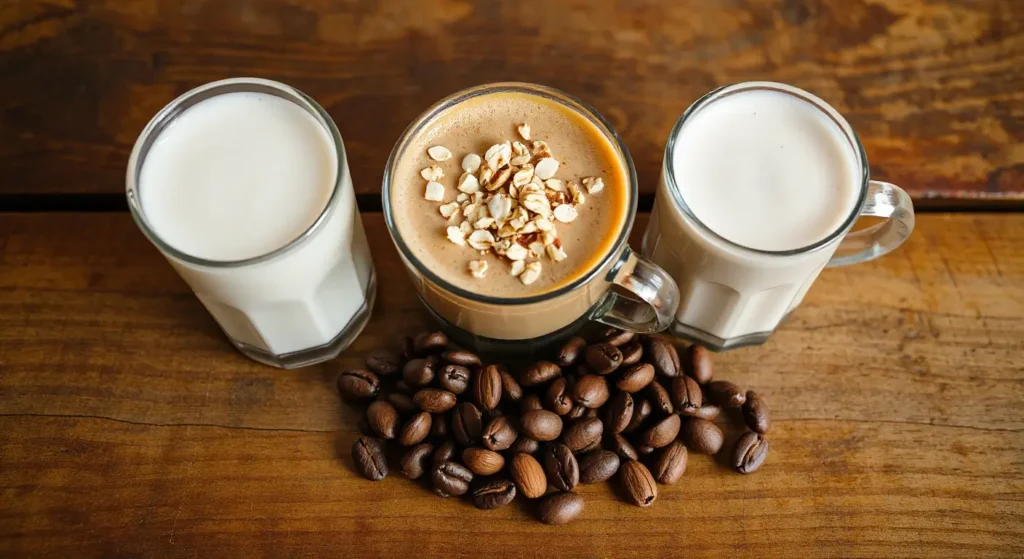
Beyond just calories, different Milk Alternatives offer unique macronutrient balancing acts. You might choose soy milk for its higher protein content compared to Almond Milk, or perhaps oat milk for its creamy texture, even if it carries slightly more carbohydrates. Understanding the full Nutrition profile allows you to match your drink choice to your larger dietary goals, whether you are focusing on protein intake or cutting back on saturated fat.
When comparing these options, we must look past the simple calorie count. As one study reviewing cow’s milk versus alternatives notes that alternative milks like almond and oat provide significantly less protein than cow’s, goat’s, and soy milk. The research emphasizes that while cow’s milk remains a strong source of many nutrients, your choice of plant‑based drink drastically shifts your protein intake for that beverage (source).
Tips for Reducing Calorie Intake
Making significant cuts to your latte calorie count doesn’t require complex planning; it often relies on swapping one ingredient for another. This How‑To approach centers on mindful substitutions, especially when ordering at places like Starbucks.
The easiest wins involve milk and sweeteners. Always default to unsweetened options for your milk, whether dairy or alternative. If you enjoy the rich texture of whole milk, try 1% or skim milk first. If you are already enjoying the lighter texture of a latte with almond milk calories, ensure it’s the unsweetened version.
A simple tip: always request “only espresso and milk” first. Taste that. If you feel it lacks flavor, then consider a sprinkle of cinnamon or sugar‑free vanilla, rather than automatically adding sugary syrups. These small shifts throughout your week make a huge difference in your overall daily Dietary Considerations.

Final Thoughts
Understanding the factors that determine your latte calorie count transforms your relationship with your favorite drink. It shifts the power away from the café menu and back into your hands. Whether you decide that the full flavor of whole milk is worth the calories, or if you find you prefer the lightness of an almond milk latte calories profile, you are now making that choice with full awareness. Enjoying coffee should always feel rewarding, not restrictive. Armed with this information about milk compositions and the impact of additives, you can tailor every cup perfectly to your needs.
Frequently Asked Questions
Q: Is a standard skim milk latte or an unsweetened almond milk latte lower in calories?
A: Generally, an unsweetened almond milk latte calories profile will be slightly lower than a skim milk one, though both are substantially lower than whole milk options.
Q: Do flavor shots from coffee shops increase the calories significantly?
A: Yes, each pump of flavored syrup usually adds between 80 to 100 calories, which adds up quickly across multiple shots or drinks.
Q: Does switching to a larger size like a Grande significantly increase the total?
A: Yes. Because lattes are milk‑heavy, moving from a 12‑ounce to a Grande (typically 16‑ounce) size automatically increases the milk volume, thereby increasing the total calories by about 25‑35%.
Q: Why is oat milk often higher in calories than I expect?
A: Oat milk often contains added sugars or naturally higher carbohydrate content to achieve its creamy texture, making its calorie count more comparable to low‑fat dairy milk than almond milk.
Q: How can I get a flavorful latte without adding sugar?
A: Ask for cinnamon, nutmeg, or cocoa powder sprinkled on top. You can also request sugar‑free flavor options if available at your café.