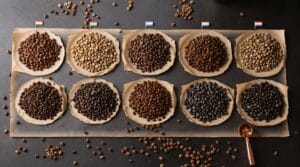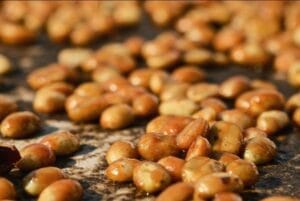

Oxygen-free anaerobic fermentation doesn’t just tweak coffee flavor: it rewires it entirely. Sealed inside airtight tanks, lactic-acid bacteria convert mucilage sugars into esters under rising CO₂ pressure, producing tropical-fruit intensity and winey depth that conventional processing simply cannot reach.
The washed variant strips mucilage away, letting anaerobic conditions sharpen clarity without the sweetness weight. The honey variant keeps it, pushing the pressure-sugar-ester mechanism to its limit. Same tank, same logic, radically different cups.
For an in-depth look at how advanced techniques are applied in origin settings, consult this producer fermentation protocol.
Once you have selected your preferred profile, mastering the nuances of brewing anaerobic coffee ensures you extract every ounce of that delicate clarity and sweetness.
To maximize these flavor transformations, roasters and producers must also consider the best varieties for fermentation to ensure the ideal chemical makeup and mucilage density.
What “Anaerobic” Really Means in Coffee Processing
Oxygen-free anaerobic fermentation runs inside a sealed tank (purged with CO₂ or flushed with nitrogen) while temperature and pH are tracked continuously until the process is stopped, typically between 48 and 72 hours. That sealed tank is the whole game. The moment you close the lid and displace the oxygen, you’re handing control of flavor development to a completely different cast of microorganisms than the ones working on an open fermentation bed.
Here’s why that matters. In standard open-tank or raised-bed fermentation, ambient oxygen keeps aerobic bacteria and wild yeasts in charge. Seal the tank, and those organisms get crowded out. The anaerobic microbes that take over (mainly lactic acid bacteria and certain yeast strains) produce a different set of metabolic byproducts: more esters, more complex organic acids, more of the compounds that read on your palate as tropical fruit, wine, or fermented sweetness.
What makes the anaerobic coffee process flexible is where in the production chain you apply it. You can load whole, unpicked cherries into the tank: skin, mucilage, and all, or you can depulp first and ferment the bean with just its mucilage layer intact. That single decision shapes whether you end up with a washed-style cup or a honey-style cup, even before drying begins.
The tank itself does a specific mechanical job. CO₂ builds up naturally as fermentation progresses, and that pressure helps maintain the oxygen-free environment without constant intervention. A nitrogen flush at the start accelerates the purge and gives the producer a cleaner starting point. From there, temperature monitoring keeps the microbial activity within a predictable range: warmer tanks ferment faster and push more intensity, cooler tanks slow things down and tend toward cleaner, more defined acidity. pH monitoring tells the producer when fermentation has reached its target and when to open the valve before the batch tips into over-fermentation.
Duration is where producers have the most room to experiment: and the most room to go wrong. The standard window is 48 to 72 hours, but some producers extend fermentation to a full week when they’re chasing deeper complexity. Bram de Hoog, a coffee processing expert featured in *Barista Magazine*, puts the baseline simply:
“Anaerobic processing is a style of fermentation that happens without the presence of oxygen. This can be for natural, honey, or washed coffee.”
That last part is easy to miss. Anaerobic fermentation isn’t a processing style on its own: it’s a fermentation condition that can be layered onto washed, honey, or natural processing. The oxygen-free environment changes what the microbes do. What happens after the tank opens (how the bean is washed, how much mucilage is left on, how it dries) determines the final cup character.
This rigorous management of internal microclimates and whole-cherry environments shares deep roots with Carbonic Maceration Coffee The Complete processing methodologies pioneered in carbonic maceration.
How the Anaerobic Coffee Process Splits Into Two Production Paths
Structured production flow separates the anaerobic washed variant from the honey variant at a single, decisive point: the depulping step, where the processor chooses how much mucilage stays on the bean before it enters the sealed tank. That choice isn’t cosmetic: it rewires the entire fermentation chemistry that follows. Understanding where the paths diverge makes the rest of the process (the tanks, the sensors, the timing) click into place.
How depulping determines the honey variant
The depulping step works the same way for both variants at the start. A mechanical depulper strips the cherry’s outer skin, exposing the slippery mucilage layer clinging to the parchment underneath. From here, the two paths split.
For the washed variant, most of that mucilage gets washed away before fermentation begins. The bean enters the tank relatively clean: less residual sugar, more room for the microbial environment to express itself through the fermentation gases rather than through raw sweetness.
For the honey variant, the processor skips that washing step entirely or cuts it short. The bean goes into the tank with a thick coat of mucilage still attached. Think of it like marinating something in its own sauce before cooking: the sugar source is right there, pressed against the seed, and nowhere to go once the lid closes.
The degree of mucilage retention is what gives honey-processed coffees their names in conventional processing: yellow, red, and black honey all refer to how much mucilage was left on during drying. In the anaerobic version, that same logic applies, but instead of open-air drying driving the process, a sealed, oxygen-free environment takes over. The partial drying that happens before tank entry, or in some cases, after, controls the starting Brix level, which is the sugar concentration in the mucilage measured in degrees Brix.
wet mill processing expert Felipe, at a specialty coffee farm, explains how that starting condition shapes everything that follows:
“The coffee cherries are placed in sealed tanks after being hand-sorted upon arriving at the wet mill. The elimination of oxygen in this phase favors a greater concentration of lactic acid bacteria (and therefore of lactic acid) following the fermentation of the carbohydrates of the mucilage, which in turn contributes to the organoleptic profile of the resulting cup. The coffee cherries that will be processed with the lactic‑fermentation method usually enter our wet mill with high Brix degree and pH readings, as these conditions will help the fermentation process to overcome the minimum time of 80 hours necessary for any lactic process.”
High Brix going in means more fuel for the bacteria. More fuel means a longer, more productive fermentation: which is exactly why honey-variant batches tend to carry heavier sweetness and body into the cup. The mucilage isn’t just a byproduct left on by accident. It’s the feedstock.
What equipment does the sealed fermentation require?
Fermentation hardware for the anaerobic coffee process isn’t improvised: the sealed tank that defines the whole method demands specific tools to hold the conditions steady across the entire fermentation window.
Here’s what a properly equipped setup requires:
- Airtight stainless-steel tank (food-grade plastic is used at smaller operations): The core vessel. It needs to seal completely: no oxygen leaks, no pressure buildup without a controlled exit.
- One-way pressure-release valve: As the bacteria consume mucilage sugars, they produce CO₂. That gas builds pressure inside the tank. The valve lets it escape without letting outside air back in. Without it, the tank becomes a pressure bomb; with it, the anaerobic environment stays intact.
- CO₂ pump or nitrogen flush system: Used at the start of fermentation to purge residual oxygen from the tank before sealing. Some producers inject CO₂; others use nitrogen. Either way, the goal is the same: starve the environment of oxygen so only anaerobic microbes thrive.
- pH sensor: Tracks acidity as fermentation progresses. A dropping pH signals active microbial activity; a pH that falls too fast or too far can mean the batch is heading toward over-fermentation.
- Brix sensor: Measures the sugar concentration in the mucilage. Producers use it to confirm starting conditions (as Felipe describes) and to track how quickly the microbes are consuming available sugars.
- Temperature sensor: Fermentation rate is temperature-sensitive. A warmer tank accelerates microbial activity; a cooler one slows it. Without temperature monitoring, the 24–72 hour window becomes a guess.
That 24–72 hour window is the standard range for most anaerobic batches, though some producers (particularly those chasing lactic-dominant profiles) push fermentation up to a full week under tightly controlled conditions. The sensors aren’t optional extras. They’re the feedback loop that tells the processor whether the batch is on track or drifting toward something unusable.
To see how this setup actually looks in a working wet mill (the tanks, the CO₂ system, the valve in action), this field demonstration from Café Imports at La Chumeca walks through the equipment in real conditions:
Once the tank seals and the oxygen is gone, the real chemistry begins. The pressure building inside (driven by CO₂ from those fermenting mucilage sugars) doesn’t just stay in the gas phase. It starts pushing compounds directly into the bean. That’s where the tropical fruit notes and “winey” aromas come from, and it’s exactly what the next section breaks down.
Inside the sealed tank, the pressure‑sugar‑ester mechanism works like a molecular pump
Inside a sealed anaerobic fermentation tank, rising CO₂ pressure forces mucilage sugars through the outer layers of the coffee bean and into its interior: and that physical push is what sets off the entire flavor chain. Think of it like squeezing a sponge: the pressure doesn’t just sit there, it drives compounds inward, loading the bean with the raw material that fermentation bacteria will later transform. That’s the step most people miss when they talk about anaerobic coffee: the flavor isn’t just on the bean, it’s been pushed into it.
Once oxygen is depleted inside the tank, the microbial population shifts. Facultative anaerobic bacteria (primarily Lactobacillus and Leuconostoc species) take over, because they’re built to thrive without oxygen. These are lactic-acid bacteria, and under sealed, pressurized conditions, they dominate the fermentation environment and go to work on those sugars.
Here’s where it gets interesting. Lactic-acid bacteria don’t just produce lactic acid. They generate a whole suite of secondary metabolites: esters, alcohols, and ketones. Esters are the ones you taste. They’re the volatile compounds responsible for the banana, bubble-gum, and tropical-fruit notes that make anaerobic coffee so immediately recognizable (and so polarizing).
The research backs this up with striking specificity. Chahan Yeretzian and Samo Smrke, researchers at Zurich University of Applied Sciences’ Coffee Excellence Centre, found that one ester in particular tells the whole story:
“One very intense fruity smelling compound, ethyl 3-methylbutanoate, stood out in the natural carbonic macerated coffee. It was found to be 125-times more abundant than in the washed coffee.”
One hundred and twenty-five times. That’s not a subtle shift in flavor profile: that’s a different category of sensory experience (driven by a single ester that the pressure-sugar mechanism helped produce). This is also consistent with findings published in Frontiers in Microbiology, which confirm that CO₂ accumulation in sealed anaerobic tanks creates the pressurized environment that drives metabolite diffusion into the bean interior, enabling lactic-acid bacteria to metabolize those sugars into the esters, alcohols, and ketones identified as the chemical basis of tropical-fruit and winey aromas in the final cup.
The winey and rum-like notes come from the same mechanism, just further along the metabolic chain. As fermentation extends, some of those alcohols interact with organic acids to produce heavier, more complex esters: the ones that read as stone fruit, red wine, or dark rum rather than fresh banana. How far down that chain the fermentation travels depends on temperature, tank pressure, and time: variables that producers control deliberately, or sometimes don’t.
So when you taste that wave of mango or the rum-barrel finish in an anaerobic cup, you’re not tasting a flavoring or an additive. You’re tasting the end product of a pressure-driven sugar migration and a bacterial metabolic cascade: one that started the moment the tank was sealed.
Clean Brightness vs. Extreme Sweetness: How Sensory Mapping Explains Both
Sensory mapping of the anaerobic coffee process reveals a clean split: remove the mucilage before fermentation and you get bright clarity; keep it on and you get intense sweetness. The logic is direct: mucilage is the sugar reservoir. How much of it surrounds the bean during that sealed, oxygen-free fermentation determines how many esters form, how much sweetness gets driven into the seed, and what ends up in your cup. The two variants (washed and honey) sit at opposite ends of that mucilage dial.
Why the washed profile tastes so clean and bright
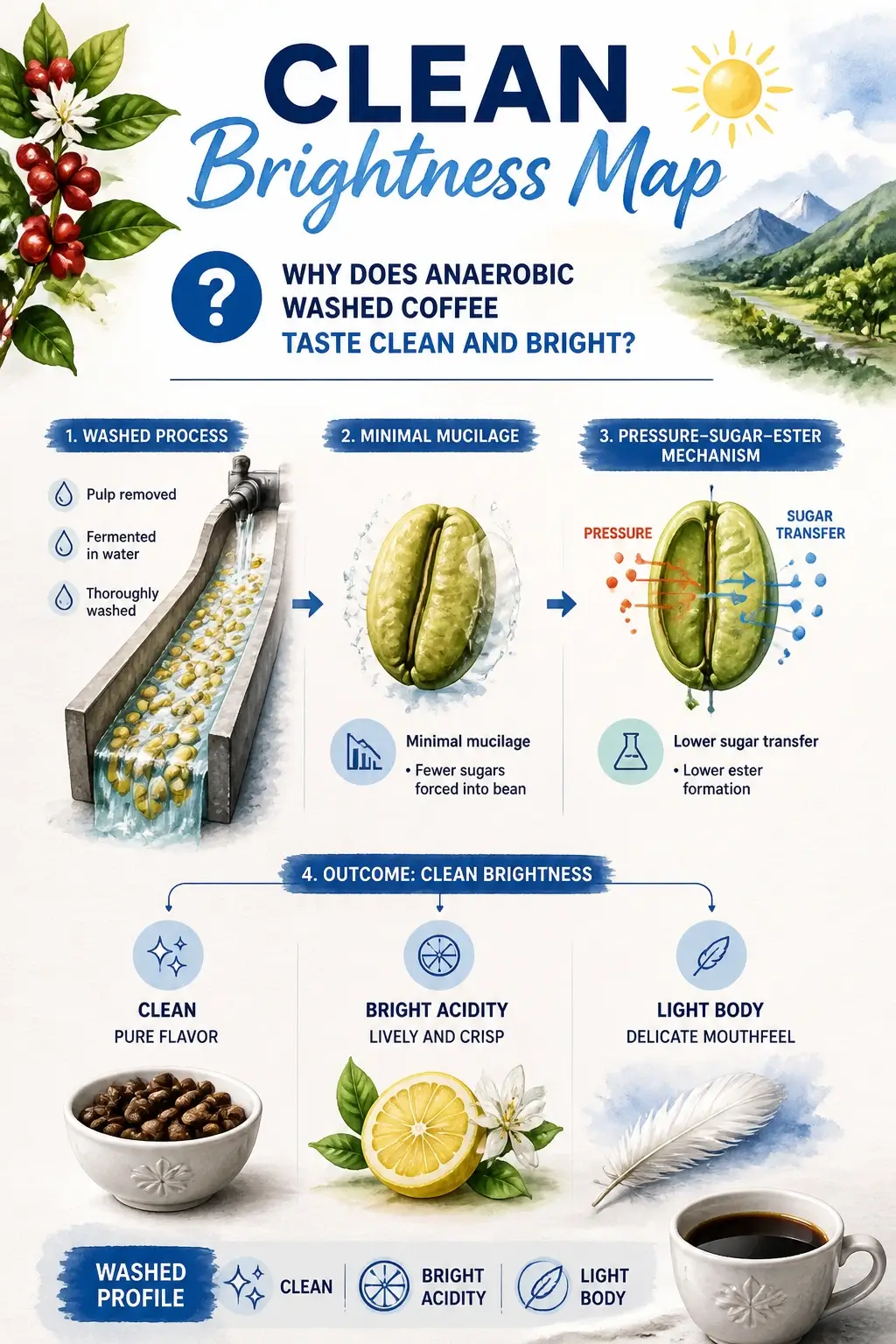
The classic washed profile delivers clean, bright acidity with a light body, and the anaerobic washed variant preserves exactly that character while layering in complexity. Here’s why: when the cherry is depulped before the sealed tank, minimal mucilage clings to the bean. Less mucilage means fewer fermentable sugars available during the anaerobic stage. Fewer sugars mean fewer esters formed under pressure. The fermentation still happens (CO₂ builds, pH drops, organic acids develop) but the process is working with a leaner fuel source.
The result is a cup where the bean’s inherent acidity isn’t buried under sweetness. Citrus, florals, and tea-like notes come forward because there’s nothing syrupy competing for your attention. The fermentation adds vibrancy and lifts the aromatic ceiling, but the underlying structure stays clean.
Think of it like a high-resolution photograph. Less noise in the background means the subject (the origin character of the bean) comes through sharper.
Here’s a visual of how that pressure-sugar-ester chain connects back to the clean-brightness outcome:
Why the honey profile feels intensely sweet
The honey profile delivers higher body and a syrupy, lingering sweetness: and the retained mucilage is the direct cause. When a honey-processed coffee goes into the anaerobic tank, it carries a significant sugar load still attached to the parchment. That mucilage becomes the fermentation’s primary fuel. More sugar available means more ester production under pressure, which means more sweetness compounds driven into the bean itself.
The body follows the same logic. Mucilage sugars that don’t fully convert to esters caramelize during drying and contribute to mouthfeel. The cup feels heavier, rounder, and the sweetness doesn’t just arrive: it lingers. Caramel, stone fruit, brown sugar, and tropical notes dominate because the ester profile is richer and denser from the start.
Here’s where a common label problem trips people up. “Anaerobic washed,” “washed anaerobic,” and “natural anaerobic” appear on bags almost interchangeably, and that causes real mis-expectations at the brew bar. They’re not the same thing. Anaerobic washed means the cherry is depulped first, then the naked bean undergoes sealed fermentation: low mucilage, clean outcome. Anaerobic honey means mucilage is intentionally retained before the sealed stage: higher sugar load, sweeter outcome. Anaerobic natural means the whole cherry ferments intact: maximum sugar exposure, the most fruit-forward and “winey” of the three.
The mucilage sugar content isn’t a footnote on the label. It’s the variable that determines which cup you’re actually buying. A side-by-side comparison makes this easier to track:
| Attribute | Washed | Honey | Anaerobic |
|---|---|---|---|
| Brightness | Crisp, bright acidity | Balanced acidity between washed and natural | Vibrant acidity |
| Body | Clean, tea-like | Fuller, rounder mouthfeel | Smooth, velvety |
| Sweetness | Lighter, refined | Moderate to syrupy sweetness | Enhanced sweetness |
| Dominant Aroma Notes | Citrus, floral, tea-like | Caramel, brown sugar, stone fruit, honey, tropical fruit | Fruity (berries, tropical fruits), wine-like undertones |
| Mucilage Retention | Removed during fermentation | Partial (varies by type: white/yellow to red/black) | None (anaerobic washed); whole cherry (anaerobic natural) |
Batch Variability in Anaerobic Coffee Is the Industry’s Honest Problem
Stubborn batch variability in the anaerobic coffee process is driven by three interdependent variables (temperature inconsistency, pH fluctuation, and CO₂ pressure variation), any one of which, left unchecked, can swing a lot from tropical and sweet to vinegary and sharp. Think of the sealed fermentation tank as a pressure cooker with no thermostat. The microbial community inside is extremely sensitive to its environment, and small shifts in any of those three parameters change which microbes win, which metabolic pathways dominate, and therefore which flavor compounds end up in your cup.
That’s not a fringe problem. According to the Specialty Coffee Association’s Fermentation Practices Survey 2023, which gathered responses from 312 producers across 24 coffee-producing countries, approximately 58% of specialty-coffee producers using anaerobic fermentation reported noticeable batch-to-batch variability in both flavor profile and chemical metrics. More than half. That number tells you this isn’t a skill gap at a handful of farms: it’s a structural gap in how the industry has standardized (or hasn’t standardized) the process itself.
Here’s the chain of events when things go sideways. Temperature creeps up mid-fermentation: common in equatorial climates with no climate-controlled processing rooms. Higher temperature accelerates microbial activity, burns through available sugars faster, and pushes acetic acid and ethanol production into overdrive. The result is over-fermentation: that vinegary, alcoholic off-flavor that makes a buyer’s face do something involuntary on the first sip. pH drops faster than expected, CO₂ pressure builds unevenly, and by the time the producer opens the tank, the window for “complex and clean” has already closed.
The “bad anaerobics” reputation that circulates in specialty circles almost always traces back to this exact sequence: not to the process itself being flawed, but to the process being run without tight parameter control.
For buyers and roasters, that variability shapes three real purchasing decisions:
- Flavor preference alignment: A buyer sourcing for a clean, filter-forward menu needs documented fermentation logs (temperature curves, pH entry and exit points, tank pressure readings) before committing to a lot. Without that paper trail, you’re betting on the producer’s memory.
- Price premium justification: Anaerobic lots command a significant premium. Inconsistent batches make that premium hard to defend to wholesale clients who expect repeatability across orders.
- Sustainability and curiosity: Many buyers are genuinely drawn to anaerobic processing because it signals producer investment and experimentation. But curiosity doesn’t survive two consecutive funky lots. Transparency about process parameters is what converts a one-time trial into a long-term relationship.
On the brewing side, anaerobic lots (especially anaerobic honey) behave differently under extraction than a conventional washed coffee does. The higher ester and organic acid load means they extract faster and can tip into over-extraction territory at parameters that would be perfectly dialed for a natural or washed lot.
The practical fix is straightforward: drop your brew temperature to the 88–92 °C range and go slightly finer on grind size compared to your baseline for similarly roasted conventional lots. The lower temperature slows extraction rate, which gives you more control over how much of that fermentation-derived complexity you pull through: enough to taste the tropical character, not so much that it becomes syrupy or astringent. The finer grind increases surface area, compensating for the lower temperature so you’re not sacrificing overall extraction yield.
It’s a small calibration, but it’s the difference between a cup that makes a customer ask “what is that?” in the best possible way, and one that makes them wonder if something went wrong.
A Clean Checklist Closes the Anaerobic Process Loop
A tight, decisive process checklist is what separates a repeatable anaerobic coffee outcome from an expensive guess. The variables (depulped beans versus 30–50% mucilage retention, pH targets, CO₂ pressure, drying endpoint) aren’t independent knobs. They’re a chain, and pulling the wrong one at the wrong moment unravels the whole batch. Once you understand which decisions lock in clarity and which ones build sweetness, the path forward writes itself.
The washed and honey variants share the same sealed-tank logic but diverge at the very first step: what you put into the tank. That single decision (how much mucilage stays on the bean) determines every sensory outcome downstream. So the two checklists below aren’t interchangeable. Run the right one for the cup you’re trying to build.
The Washed Anaerobic Checklist Targets Clarity
- Step 1 – Start with fully depulped beans. Strip the cherry completely before sealing the tank. The washed checklist depends on this. Mucilage left on the bean at this stage adds sweetness and body you don’t want competing with the clean, bright acidity that makes anaerobic washed lots worth the effort.
- Step 2 – Set the tank environment before you seal it. Target a fermentation window of 48–72 hours. Hold temperature between 22–28 °C: cooler than that and microbial activity slows to a crawl; warmer and it accelerates past your control window. Monitor pH continuously and stop fermentation when it hits 4.0–4.5. That range signals that the lactic acid bacteria have done their work without tipping into the sharper, more erratic acidity that lives below pH 4.0.
- Step 3 – Maintain CO₂ pressure at 1–2 bar. This is what makes the tank anaerobic in the first place. The CO₂ blanket excludes oxygen, which keeps acetic acid bacteria out of the equation. At 1–2 bar, you’re also building enough internal pressure to drive sugar conversion toward esters and organic acids rather than alcohol. Vent slowly and deliberately: a sudden pressure drop can stress the beans and introduce off-notes.
- Step 4 – Wash the mucilage off completely after fermentation. Don’t rush this step or treat it as optional. Any residual mucilage left on a washed lot will read as sweetness and body in the cup, fine for honey, wrong for washed. Rinse until the water runs clear.
- Step 5 – Dry to 12% moisture in parchment. Slow, even drying on raised beds preserves the volatile compounds built during fermentation. Rush the drying or pile beans too deep and you’ll bake off the delicate floral and citrus notes before they ever reach the roaster.
- Step 6 – QC taste for clean acidity. Before this lot ships or gets roasted at scale, cup it against your target profile. You’re listening for brightness, clarity, and a fruit note that feels precise rather than jammy. Any funk or ferment-forward heaviness is a signal that fermentation ran long or temperature crept up.
- Step 7 – Brew with a finer grind at 88–92 °C. Anaerobic lots are denser and more developed than conventionally processed beans. A finer grind increases surface area to compensate. Dropping brew temperature to 88–92 °C keeps the brighter acids intact and prevents the extraction from turning heavy.
The Honey Anaerobic Checklist Builds Sweetness
- Step 1 – Retain 30–50% mucilage on the depulped bean. This is the defining decision for the honey checklist. That mucilage layer is a concentrated sugar source. During sealed-tank fermentation, microbes metabolize those sugars into esters and organic acids: the same chemistry as the washed variant, but with more raw material to work with. The result is a cup with noticeably more body and sweetness.
- Step 2 – Run the same fermentation parameters. The 48–72 hour window, 22–28 °C temperature band, and pH target of 4.0–4.5 apply here too. The difference is that with more mucilage present, fermentation moves faster and generates more CO₂. Check pressure and pH more frequently: every 8–12 hours rather than every 24.
- Step 3 – Hold CO₂ pressure at 1–2 bar. Same target, slightly more active management. The higher sugar load means the tank will want to build pressure faster. A consistent 1–2 bar keeps fermentation in the sweet spot without letting it overshoot into alcohol-dominant territory.
- Step 4 – Partially remove mucilage after fermentation. You’re not washing to clarity here. The goal is to remove the fermented outer layer while leaving behind the compounds that have bonded to the bean surface during fermentation. How much you remove is a calibration decision: more removal moves the cup toward washed territory; less pushes it toward natural-process sweetness.
- Step 5 – Dry to 12% moisture in parchment, slowly. Honey lots are stickier and more prone to uneven drying than washed lots. Spread beans thinly and turn them regularly in the first 48 hours to prevent clumping. Uneven drying creates moisture pockets that ferment further on the drying bed: that’s where unwanted funk comes from, not the tank.
- Step 6 – QC taste for pronounced sweetness. You’re cupping for a different signal than the washed lot. Honey should land with fruit-forward sweetness, a syrupy mouthfeel, and acidity that feels rounded rather than sharp. If the cup tastes thin or bright, the mucilage retention was too low. If it tastes fermented or boozy, fermentation ran too long or too warm.
- Step 7 – Brew with a finer grind, 88–92 °C, and a 20-second longer steep. The extended contact time gives the sweetness compounds (those esters and residual sugars) more time to fully dissolve into the cup. Without it, honey lots can taste bright on the front but hollow in the finish. That extra 20 seconds is where the syrupy aftertaste actually comes from.
Real Talk: What Most People Miss About Anaerobic Coffee
Q: Why do even top producers get vinegary off-flavors in anaerobic batches?
A: Temperature creeps up mid-ferment in hot climates without controls, burning sugars into acetic acid and ethanol fast. It’s not bad process, it’s unchecked heat accelerating the wrong microbes—58% of producers report this per SCA survey. Log temps hourly or risk the batch every time.
Q: What if your anaerobic honey lot tastes thin instead of syrupy?
A: You skimped on mucilage retention below 30%, starving the ester machine. More mucilage means more sugar fuel for lactic bacteria under pressure. Check Brix at tank entry next time—low starting sugar kills the body you’re chasing.
Q: How does brewing temp swing kill an otherwise perfect anaerobic cup?
A: Standard 94°C over-extracts dense esters into astringency; drop to 88-92°C slows it for control. Pair with finer grind to boost surface area without rushing acids. It’s the fix between tropical pop and bitter regret.
Q: Why can’t you swap washed and honey checklists mid-process?
A: Mucilage choice locks in chemistry—washed needs clean depulp for brightness, honey demands 30-50% retention for sweetness fuel. Wrong start unravels esters and pH targets. Pick your path at depulping or scrap the logic.
Q: What kills floral notes in anaerobic washed after drying?
A: Rushed drying over 12% moisture bakes volatiles off the bean. Slow raised beds preserve citrus lift from low-mucilage ferments. Pile deep or hurry, and your clean brightness turns flat—QC moisture religiously.
Q: How does a sudden pressure drop ruin a sealed tank batch?
A: Venting too fast stresses beans, oxidizing compounds and spiking off-notes. Maintain 1-2 bar steady with one-way valve, then ease pressure gradual. It’s the difference between ester-rich fruit and funky regret.