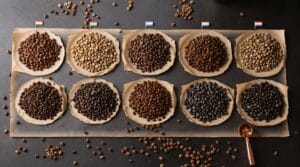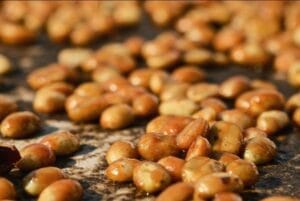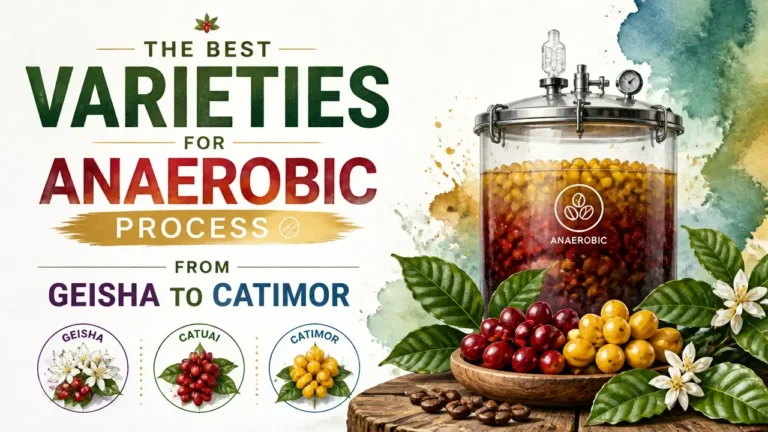

Anaerobic Fermentation Is a Controlled, Oxygen-Free Stage in Coffee Processing
Intentional anaerobic fermentation seals coffee cherries into an oxygen-free environment after pulping, forcing microbial activity down a specific metabolic pathway that produces flavor compounds you simply can’t get any other way. Think of it like this: when microbes can’t breathe oxygen, they switch to a different energy source: sugars in the coffee mucilage: and the byproducts of that switch are the esters, alcohols, and organic acids that give anaerobic coffees their signature wine-like, fruit-forward complexity. The oxygen-free environment isn’t accidental; it’s the whole point.This is where anaerobic coffee processing parts ways from its relatives. In a traditional wet (aerobic) process, fermentation happens in open tanks with oxygen present (messy, variable, harder to control). In a natural (dry) process, the whole cherry dries in open air, and fermentation is a slow, ambient affair governed by weather and luck. Anaerobic fermentation sits in its own category: it’s a deliberate intervention, timed and sealed, applied after pulping and before the coffee goes anywhere near a drying bed. When applied to whole, unpulped cherries, anaerobic natural coffee processing creates an even heavier body and a distinctively funky fruit profile.That control matters more than it might seem. Carlos, a producer interviewed by Perfect Daily Grind, put it plainly:“The anaerobic processes are more homogeneous and easier to monitor, and the aerobics are more heterogeneous and more complex to monitor.”What he’s describing is a cause-and-effect relationship baked into the physics of the tank. Seal out the oxygen, and you eliminate one of the biggest variables in fermentation: the unpredictable interaction between ambient air and the microbial community on the coffee. The result is a more repeatable flavor profile, batch to batch. That repeatability is exactly what makes anaerobic fermentation interesting to specialty producers, and why the varietal you put into that tank determines whether the process amplifies something extraordinary or just makes a loud mess.
Precise anaerobic parameters separate great batches from wasted ones
Precise anaerobic fermentation parameters: duration, temperature, pH, sugar level, and yeast strain: are the five levers that determine whether your coffee tastes like a complex natural wine or a muddy, over-fermented mess. Get even one of them wrong, and the Get even one of them wrong, and the microbial chemistry inside that sealed tank will drift somewhere you didn’t plan for. will drift somewhere you didn’t plan for. These aren’t guidelines you dial in once and forget; they’re interdependent variables that push and pull on each other throughout the entire process.Here’s the underlying logic: once you seal those cherries in an oxygen-free environment, you hand control to microbial populations. Your job from that point forward is to keep those populations working for you: not running wild.How duration and temperature define the flavor window
Fermentation duration is the timer on your flavor development, and it runs anywhere from 48 hours to 10 days depending on what you’re after. Short windows, closer to that 48-hour mark, tend to produce cleaner, fruit-forward cups with controlled acidity. Push past five or six days and the microbial activity compounds: esters and organic acids accumulate, the cup gets wilder, and the margin for error shrinks fast.
Temperature is the throttle on all of that activity. The target range sits at 15-18 °C (59-65 °F), and that band isn’t arbitrary. At those temperatures, the beneficial lactic acid bacteria and yeasts work at a pace you can actually track and manage. Go warmer and the whole process accelerates: fermentation speeds up, but so does the risk of fungal growth and off-flavor development.
When pushing these parameters to the limit, understanding fermentation risks and control becomes essential to prevent common defects from ruining an otherwise high-potential batch.
When these flavor variables align correctly, roasters and producers can successfully capitalize on current market trends and ROI.
To fully understand how these processing techniques transform green beans into exceptional brews, you can explore Carbonic Maceration Coffee The Complete guide for deeper insights into farm-level mechanics.
“We found that strict anaerobic conditions and extended fermentation times beyond 80 hours produce the best results. We also adapted our process based on field observations. For example, lowering temperature will inhibit fungal growth (which can create undesirable flavours).”That last point is worth sitting with. Lowering temperature isn’t just about slowing fermentation: it’s actively suppressing the organisms you don’t want competing for resources inside the tank. Temperature control is your first line of defense, not just a flavor dial.Seeing this system in action makes the engineering logic much clearer. The video below walks through building a food-grade, airtight drum-style fermentation tank with an airlock, temperature probe, and jacketed cooling system designed to hold that 15-18 °C window across fermentation periods from 48 hours up to 10 days:
pH, sugar level, and yeast strain complete the picture
Measured pH, cherry sugar level, and yeast strain work as a three-part system that determines how far fermentation travels and what flavor compounds accumulate along the way. Each one sets a boundary condition for the others.
- Target pH endpoint: 3.8. That’s your finish line (not a midpoint). As fermentation progresses, organic acids accumulate and pH drops. Monitoring that descent tells you exactly where the microbial population is in its work cycle. If you’re pulling samples and pH is stalling well above 3.8, fermentation has slowed, possibly due to temperature drift or a nutrient-depleted environment.
- Cherry sugar level sets the fuel supply for that entire process. The target is 24-26 Brix: that’s the dissolved sugar concentration in the cherry at harvest. Higher Brix means more fermentable substrate available, which supports longer fermentation windows and more complex ester development.
- The yeast strain you introduce determines which flavor compounds get built from that sugar. The most widely used inoculation in controlled anaerobic work is Saccharomyces cerevisiae T58, dosed at approximately 1 gram per 5 kg of cherries.
Five Anaerobic Coffee Varieties That Actually Deliver
Ranked anaerobic fermentation coffee varieties separate cleanly into two groups: cultivars whose mucilage chemistry amplifies the process, and cultivars that merely survive it. Geisha, Pacamara, SL28, Caturra/Catuaí, and Castillo/Catimor 129 each land differently: not because of marketing, but because of what’s actually sitting in their mucilage layer before fermentation even starts.#1: Geisha (Ethiopian Heirloom lines: 74-110, 74-112, 74-140, 74-165)
Geisha’s high native sugar content gives the fermentation microbes more to work with from the very first hour. The result is a tropical cascade (watermelon, papaya, pineapple) that feels almost layered, like the flavors arrive in sequence rather than all at once. The delicate acidity acts as a frame rather than a wall, so those esters come through clean instead of muddled.Key specs:- Sugar content: High, amplified further by fermentation
- Typical pH: 4.5-5.0
- Yeast strains: Leuconostoc, Saccharomyces
- Flavor signature: Tropical fruits, wine-like esters, floral top notes
#2: Pacamara
Pacamara’s unusually large bean size isn’t cosmetic: it correlates with higher mucilage volume per cherry, which means more substrate for microbial fermentation. The raw flavor profile already leans toward intense stone fruit and red apple. Anaerobic washing doesn’t reinvent it; it refines it, pulling those fruit notes into tighter focus and adding jasmine and rum-adjacent complexity underneath.Key specs:- Sugar content: High, driven by mucilage breakdown
- Typical pH: 4.5-5.0
- Yeast strains: Lactic acid bacteria, ambient yeast
- Flavor signature: Red apple, stone fruit, jasmine, rum
#3: SL28 (Kenyan)
SL28 was bred for drought resistance, but what it accidentally delivered was one of the most complex acid profiles in specialty coffee. Anaerobic fermentation converts SL28’s sharp citric and malic acids into mango, pineapple, and cherry notes with a whiskey-like finish that surprises people every time.Key specs:- Sugar content: Elevated perceived sweetness
- Typical pH: 4.0-4.8
- Yeast strains: Acetobacter, Gluconobacter
- Flavor signature: Mango, pineapple, cherry, whiskey undertones
#4: Caturra / Catuaí
The process adds cinnamon warmth, soft florals, and a creamy, tea-like texture that makes them approachable without being boring. Leuconostoc bacteria dominate at lower fermentation temperatures for these varieties, which is why temperature control is the single biggest lever producers have when working with them.Key specs:- Sugar content: Moderate to high
- Typical pH: 4.2-5.0
- Yeast strains: Leuconostoc dominant at low temp
- Flavor signature: Cinnamon, floral, syrupy sweetness, tea-like texture
#5: Castillo / Catimor 129
Leaner mucilage means the microbes have less to eat, which caps the flavor ceiling. Sophia Jiyuan Zhang and Florac de Bruyn, researchers published in SCA 25 Magazine, noted that Typica had more nutrient-rich mesocarp than Catimor. Extended anaerobic fermentation can push Castillo and Catimor 129 into “candy-like” territory: grape Kool-Aid, tropical sweet tea.Key specs:- Sugar content: Moderate, boosted by extended fermentation
- Typical pH: 4.5-5.2
- Yeast strains: Mixed anaerobic microbes
- Flavor signature: Grape, tropical sweet tea, winey esters, mild spice
| Variety | Sugar Content | Typical pH | Yeast Strain | Key Flavor Notes |
|---|---|---|---|---|
| Geisha | High (amplified by fermentation) | 4.5-5.0 | Leuconostoc, Saccharomyces | Tropical fruits, berries, wine-like, floral |
| Pacamara | High mucilage breakdown | 4.5-5.0 | Lactic acid bacteria, yeast | Intense fruitiness, rum, jasmine |
| SL28 | Elevated perceived sweetness | 4.0-4.8 | Acetobacter, Gluconobacter | Berries, citrus, whiskey notes |
| Caturra/Catuaí | Moderate to high | 4.2-5.0 | Leuconostoc dominant at low temp | Syrupy sweetness, floral, tea-like |
| Castillo/Catimor 129 | Moderate (fermentation boost) | 4.5-5.2 | Mixed anaerobic microbes | Winey, fruity esters, spice |
The Hidden Yeast Lever Behind Geisha’s Wine-Like Edge
Precisely dosed Saccharomyces cerevisiae T58 is the hidden yeast lever that separates a memorable Geisha anaerobic from an ordinary one: added at just 1 g per 5 kg of cherries, it drives the production of ethyl acetate and isoamyl acetate. Think of it this way: the yeast isn’t flavoring the coffee the way a spice would. It’s acting more like a biochemical switch. Once T58 goes to work in that oxygen-free environment, it metabolizes the cherry’s sugars along a specific fermentation pathway.That dosage: 1 g per 5 kg: isn’t arbitrary. Too little and the native microbial community outcompetes T58 before it can dominate the fermentation. Too much and the ester production overshoots, turning what should be “ripe stone fruit” into something closer to nail polish remover.Here’s where Geisha’s biology becomes the perfect partner. Geisha cherries carry a naturally higher sugar content than most commercial varieties, and T58 feeds directly on those sugars to produce its ester payload: more available sugar means more substrate for the reaction, which means ethyl acetate and isoamyl acetate build up in the fermentation vessel at levels that translate into that eruption of tropical aromatics.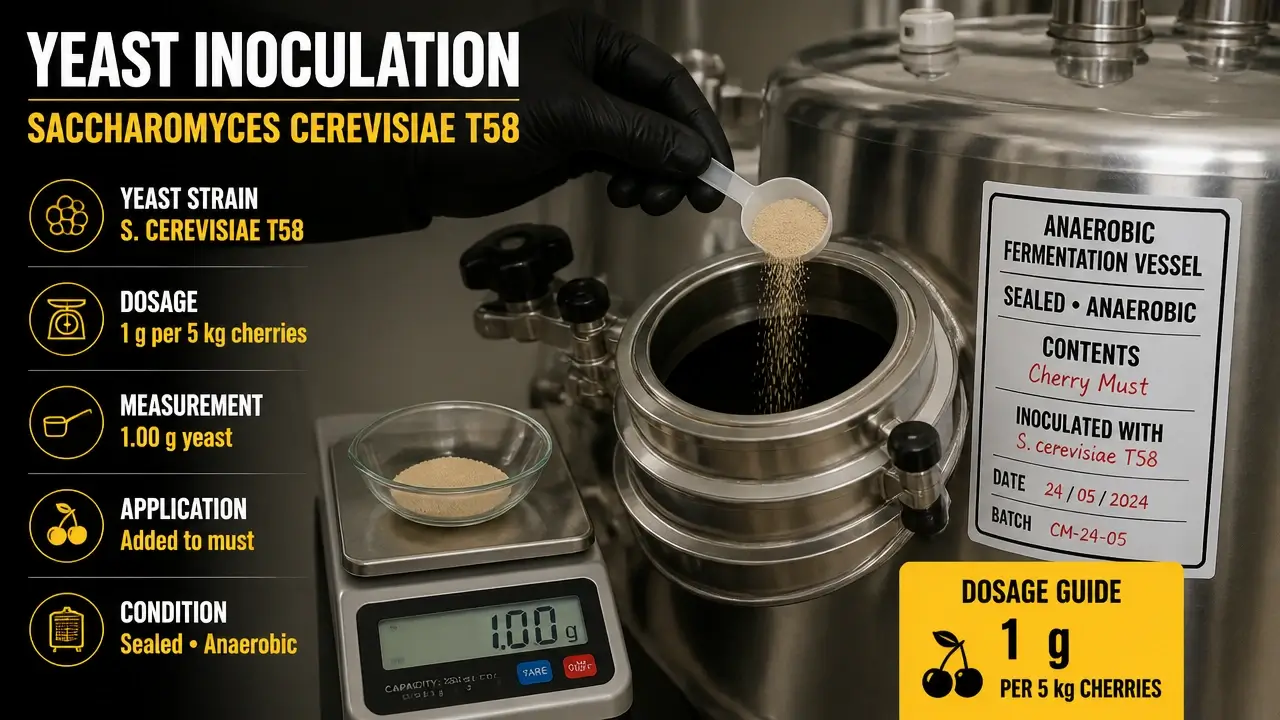 The practical insight for anyone working with anaerobic fermentation coffee varieties is this, the process parameters covered earlier set the stage, but Saccharomyces cerevisiae T58 at the right concentration is what actually performs on it.
Anaerobic Coffee Varieties Carry Real Risks Behind the Premium Price
Unchecked premium pricing, circular flavor claims, and ignored environmental costs are the three quiet problems sitting underneath anaerobic fermentation coffee varieties, and most buyers never see them.The price is real. The cost breakdown isn’t.Higher labor, specialized equipment, and the education required to run sealed fermentation vessels correctly all push anaerobic processing costs above conventional methods. What’s missing is any concrete, published breakdown of how much each factor contributes to the final price. The premium exists. The math behind it doesn’t.The flavor claims are circular.The sensory descriptions attached to anaerobic lots (wine-like esters, tropical brightness, layered complexity) are presented as selling points, not findings. There are no comparative cupping scores between anaerobic and washed versions of the same varietal. What exists instead is social applause: roasters praising each other’s lots and roasters reinforcing the hype.The environmental cost is invisible.Sealed anaerobic vessels aren’t single-use, but they require specific cleaning protocols, and the waste streams from fermentation liquid are rarely discussed. Extended drying adds time, labor, and in humid climates, mechanical drying energy. None of the available literature puts a sustainability number on any of this.Bram, a coffee processing expert in Barista Magazine puts the operational risk plainly:“On the other hand, Bram adds that this type of fermentation ‘has a steep learning curve, and any mistake can ruin a batch of coffee.’”The verdict.Geisha’s superior anaerobic flavor is chemically driven: yeast T58 produces the ester profile that makes it sing in a sealed fermentation environment. That part is real. But the premium price rests on unverified sensory claims and hidden environmental costs. Professionals considering large-scale anaerobic production should treat the flavor upside as genuine and the evidence base as thin. Run your own cupping trials. Demand chemical analysis on your lots. Ask your processing partner what happens to the fermentation waste.