

Moderate coffee directly antagonizes adenosine receptor activity to sustain alertness without compromising long-term neural integrity. Rich chlorogenic acids simultaneously reduce oxidative stress, creating a dual-defense mechanism against cellular decay and protein aggregation.
This biochemical synergy lowers Alzheimer’s disease and Parkinson’s disease risk by preserving functional brain networks. Strategic consumption transforms a daily ritual into a proven neuroprotective intervention, safeguarding cognitive function through precise metabolic engagement. Seniors maximize benefits by adhering to safe daily caffeine limits while choosing filtered brews to eliminate lipid-raising compounds.
How does caffeine block adenosine receptor activity?
Bioactive caffeine acts as an adenosine receptor antagonist that shifts adenosine receptor activity to trigger dopamine release and norepinephrine release. Think of adenosine as a brake pedal for your brain (that builds up throughout the day). When caffeine sits in those receptor seats, it keeps your foot off the brake so your natural stimulants can flow freely.
Verified Coffee health studies show this immediate spike in arousal actively supports long-term brain protection. This mechanism is the foundation for both your short-term focus and the downstream neuro-protective cascades we want for aging minds.
Fredholm et al., pioneering researchers in adenosine receptor pharmacology, describe the mechanical shift this way:
“At its core, caffeine functions as an adenosine receptor antagonist blocking mainly A1 and A2A subtypes, causing increased neurotransmitter release, especially dopamine and norepinephrine, which results in higher cortical arousal and neuronal excitability.”
This confirms that caffeine isn’t adding energy so much as it is removing the biological limits on the energy you already have.
How much caffeine is safe for seniors?
Daily caffeine stays within the FDA safe upper limit for most adults but overwhelms slow metabolizers. For most of us, 400 milligrams flows through the system without causing a backup. But if your liver enzymes work slower, that same amount builds up like traffic instead of clearing out.
The FDA sets the ceiling at 400 milligrams, which equals about four to five 8-ounce cups. However, average adult consumption sits much lower, around 135 milligrams or just one to two cups. This gap matters because stable coffee health benefits often appear in that moderate range rather than at the maximum cap.
Here is how the numbers break down for safety and benefits.
| Guideline | Daily Caffeine (mg) | Equivalent Cups of Coffee* | Notes on Safety/Benefits |
|---|---|---|---|
| FDA / AMA Safe Upper Limit | ≤ 400 mg | ≤ 4‑5 cups (8 oz each) | Generally safe for healthy adults; excessive intake may cause insomnia, jitteriness, or heart rhythm issues. |
| Average Adult Consumption | ≈ 135 mg | ≈ 1‑2 cups (8 oz each) | Typical intake linked to modest alertness and possible reduced risk of certain chronic diseases. |
| Senior‑Specific Recommendations* | 100‑200 mg | 1‑2 cups (8 oz each) | Lower limit advised for older adults, especially those with cardiovascular disease, osteoporosis risk, pregnancy, or slow caffeine metabolism. Benefits include improved cognition and mood. |
*One standard 8‑oz cup of brewed coffee ≈ 95 mg caffeine. Adjust for strength/size as needed.
Seniors often need to stay closer to the lower end, around 100 to 200 milligrams. This adjustment accounts for changes in how the body processes stimulants as we age. Research shows 200 milligrams in a single sitting or 400 milligrams spread across the day is not harmful and is linked to increased alertness, well‑being, concentration, mood, limited depression, and a reduced risk of cognitive decline, stroke, Parkinson’s and Alzheimer’s.
According to Researchers in nutritional pharmacology and chronic disease prevention, “A 2022 multinational meta-analysis of 6,121 subjects found that moderate daily intake of 1–4 cups of coffee was associated with a reduced incidence of Alzheimer’s disease, whereas excessive consumption (>4 cups/day) may yield counterproductive effects.” This confirms that more isn’t better for long-term coffee health when the goal is protection. While staying within these limits, research shows a specific pattern of cognitive protection.
Alzheimer and Parkinson risks respond to moderate intake
Late-onset Alzheimer and Parkinson risks show observational risk reduction tied to moderate caffeine use until excessive consumption flips the script. This isn’t about curing existing damage, but rather slowing the clock on when symptoms arrive. The data holds up across large populations, showing a clear line between sipping for protection and drinking for stimulation.
When we look at the numbers, the protective signal is strong. Moderate coffee health habits link to up to 65% lower Alzheimer’s rates and roughly 17% Parkinson’s risk reduction per 200 mg of caffeine. You also see broader neuro-cognitive benefits, like lower stroke risk and slower cognitive aging. But here is the catch: most of this evidence is observational, meaning we see the pattern without randomized trials to prove direct causation.
The real mechanic here is the dose-response curve. Protective coffee health effects peak when you stay within the 1-to-4-cups-per-day range. Push past that boundary, and the benefit evaporates. Intake above 4 cups/day is linked to faster cognitive decline, reversing the gains you built with moderate intake. Water is lazy, and biology is similar: it finds the weakest spot in your system when overloaded.
AIBL Study researchers tracked this exact trajectory over 126 months:
“Higher baseline coffee consumption was associated with slower cognitive decline in executive function, attention. and lower likelihood of transitioning to mild cognitive impairment or AD status, over 126 months.”
This quote confirms that consistent, baseline consumption keeps the brain’s executive function and attention networks efficient. It suggests the protective layer forms over time, not from a single cup.
If you want to see how these epidemiological studies map out the nuanced risk-reduction data, this visual breakdown helps:
Understanding these limits lets you use coffee as a tool rather than a gamble.
Polyphenols drive oxidative stress reduction beyond caffeine
Bioactive polyphenols enable oxidative stress reduction by donating electrons to unstable molecules before they harm neurons. Think of this like a sacrificial shield taking the chemical hit so your brain cells don’t rust. That trade-off keeps inflammation low and signaling clear.
Dominant chlorogenic acids make up the bulk of this defense squad inside your cup. They quiet the molecular noise that leads to long-term cognitive decline. Sustainable Coffee health depends on this chemical defense mechanism rather than stimulation alone.
But how you brew changes the chemical profile reaching your bloodstream. Paper-filtered coffee traps oily compounds called cafestol that can raise LDL cholesterol. Metal-filtered unfiltered coffee lets those oils pass through into your cup. For most seniors, keeping LDL in check matters more than retaining every last oil.
You can see the difference in body and clarity when you look at the brew directly.

Choosing the right filter preserves the brain benefits without taxing the heart.
How Coffee reshapes your functional brain networks
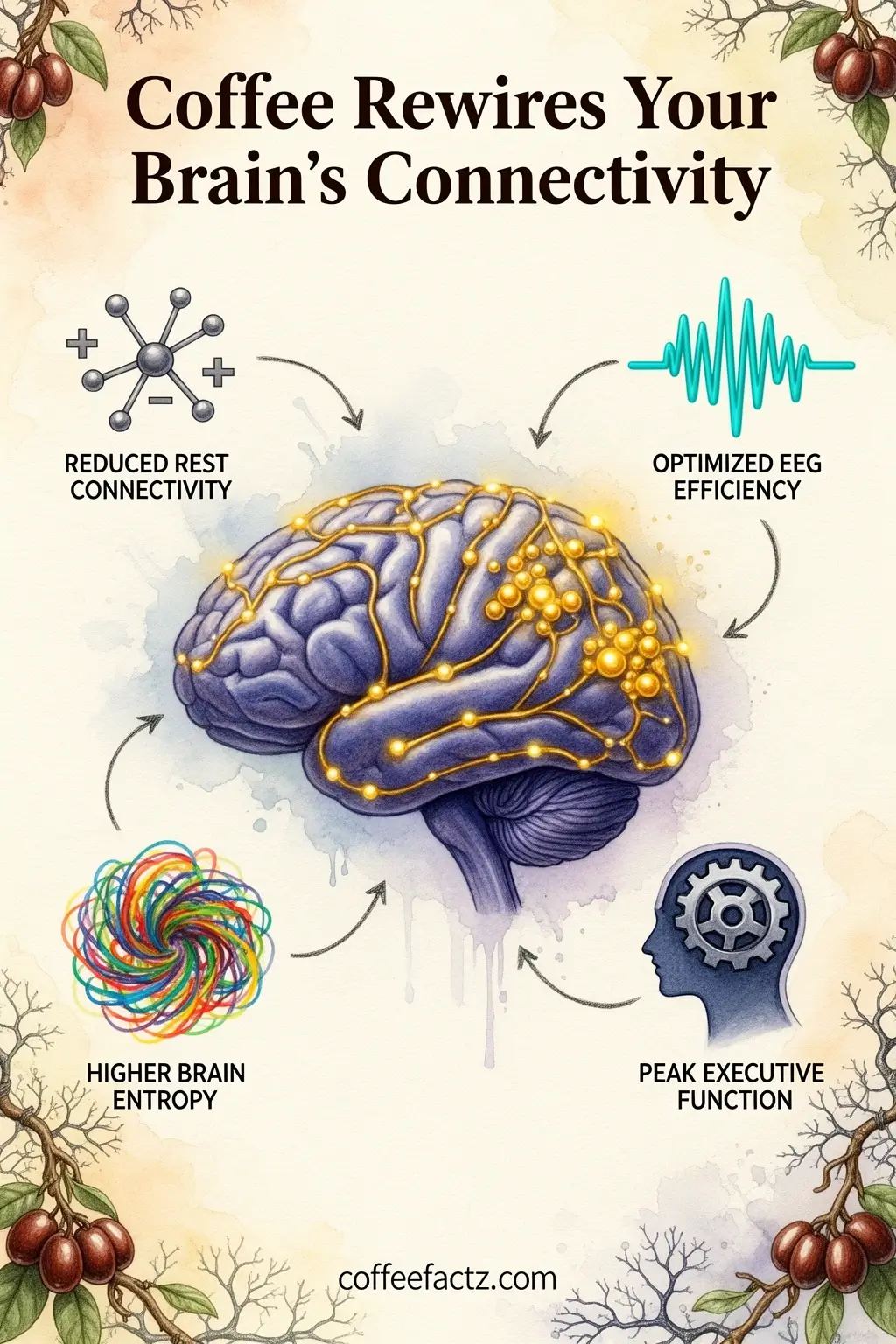
Reshaped functional brain networks reveal their new structure through fMRI connectivity scans and EEG efficiency readings. We tend to think caffeine just floods the system with energy, but it actually acts like a traffic controller for your neural pathways. Instead of lighting up every region equally, it helps your brain prune the noisy connections so the important signals get through cleaner.
It sounds counterintuitive to hear that connectivity decreases, but that drop in somatosensory, limbic, and subcortical-posterior networks at rest is actually a sign of efficiency. This pattern scales with consumption frequency, meaning the more habitual the drinker, the more streamlined the resting state becomes. That efficiency shows up clearly in EEG efficiency metrics, where coffee reorganizes resting-state connectivity toward better network properties. People with this pattern perform better on executive-function tasks like the Digit Span and Trail Making Test Part B.
There is a hidden link here too, where caffeine-induced increases in resting-brain entropy may reflect the same reduction in low-frequency functional connectivity observed in fMRI studies. It points to a common mechanism where altered network efficiency protects your cognitive edge. You can see this cascade from intake to altered logic mapped out below.
How recommended coffee intake secures lasting Coffee health
Precise recommended coffee intake balances brain protection and safety by filtering out cholesterol-raising oils and stopping before afternoon sleep cycles. We aren’t just counting cups here. We are managing the chemical load your liver handles while keeping the antioxidants flowing.
Many seniors think they need to quit caffeine to stay healthy. That assumption ignores the data. Daily coffee and caffeine intake can be part of a healthy balanced diet and does not need to be stopped in elderly people. The key is staying within the guardrails. As NHANES study authors, epidemiologists analyzing US national health data on aging, explain:
“Our study suggests that coffee, caffeinated coffee and caffeine from coffee were associated with cognitive performance for participants aged 60 years or older… L-shaped associations were apparent for coffee.”
That L-shape tells us the benefit peaks at a moderate level before tipping into risk. This curve defines the safe zone we need to target. To hit that zone, we need to look at the brew and the clock.
Why filtered brew defines safe recommended coffee intake
Safe recommended coffee intake lands between 200 and 300 mg daily by using filtered brew to remove LDL-spiking diterpenes. That’s roughly two to three standard cups. Unfiltered methods like French press let oils through that can raise cholesterol, which muddies the heart-health benefits. You also want to avoid excessive sugar and artificial creamers that spike inflammation.
Hitting this target is harder than it looks in the real world. Overall adherence in the U.S. is low: only ≈ 20 % of older coffee consumers (age 60+) report drinking coffee 2–3 times per day, which matches the 2–3 cup guideline. 73 % of seniors drank coffee at least once in the past day, but most consume either <1 cup or >4 cups. According to data on senior caffeine intake, mean daily caffeine intake among seniors is highest in Non‑Hispanic White groups (≈ 194 mg/day) and lowest in Non‑Hispanic Black groups (≈ 80 mg/day). Internationally, 22 % of adults aged 60 and over in the United Kingdom consumed 2–3 cups daily, while 55 % drank ≥ 4 cups and 23 % drank ≤ 1 cup.
How timing of consumption overrides decaf coffee benefits
Strategic timing of consumption prevents sleep disruption by cutting off caffeine before afternoon adenosine receptors reset. If you drink too late, you rob yourself of the deep sleep needed to clear brain waste. Even one late cup can fragment your rest.
In a controlled EEG study of late‑middle‑aged participants (average age ≈ 56 years), a single 300 mg dose of caffeine administered in the afternoon increased sleep onset latency to an average of 66 minutes. The same dose markedly reduced the proportion of deep (slow‑wave) sleep (Stages 3 and 4) during the first three hours of the night, demonstrating that afternoon caffeine disrupts sleep architecture in older adults by lengthening latency and diminishing restorative slow‑wave sleep.
Keep your last cup before lunch. Decaf coffee offers some antioxidants, but it provides fewer neuro‑protective benefits than the caffeinated version. Stick to the real thing, earlier in the day.
Real Talk: What Most People Miss About Coffee’s Brain Edge
Q: What if you’re a slow metabolizer – how do you know and what do you do?
A: Slow metabolizers build up caffeine like traffic in a bottleneck because your liver enzymes lag; test via genetic kits or symptoms like jitters from one cup. Cut to 100mg max daily, that’s one weak brew, and watch benefits without the crash – it’s your biology calling the shots.
Q: Why does going over 4 cups suddenly tank the Alzheimer’s protection?
A: The dose-response curve peaks at 1-4 cups then flips; excess floods adenosine paths and spikes oxidative noise, accelerating protein gunk instead of clearing it. Biology hates overload – stick under that line or you’re brewing decline, not defense.
Q: Does decaf give the same brain protection or is it a weak substitute?
A: Decaf keeps some polyphenols for oxidative shield but skips caffeine’s receptor punch, so neuroprotection drops hard. It’s fine for late-day antioxidants, but don’t kid yourself – real caffeine drives the dopamine/EEG efficiency gains seniors need most.
Q: What happens if you drink coffee after lunch – sleep ruined for good?
A: One afternoon 300mg dose jacks sleep latency to 66 minutes and guts deep slow-wave recovery, per EEG data on mid-50s folks. Cut off before noon to let adenosine reset; late cups steal the brain waste-clearing rest that amplifies daytime gains.
Q: Why filtered over French press – isn’t unfiltered more ‘natural’?
A: Unfiltered lets cafestol oils through, spiking LDL cholesterol in seniors where heart risk looms large; paper traps them while saving chlorogenic acids. Natural don’t mean better here – filtered delivers pure neuro-gains without the vascular tax.
Q: Can coffee fix existing cognitive decline or just delay the inevitable?
A: No fix for damage done, but moderate intake slows symptom clocks via network efficiency and risk cuts up to 65% on Alzheimer’s. It’s prevention armor building over months, not a rewind button – start now if your baseline’s still solid.
Q: Why do some seniors get zero benefits despite 2-3 cups a day?
A: Stats show 73% drink daily but most skew under 1 or over 4 cups; genetics, poor filtering, or late timing kill the signal. Nail 100-200mg filtered early, no sugar – L-shaped curve means precision hits protection, slop gets nothing.